
Ecommerce SEO isn't just a marketing buzzword. It’s the art and science of setting up your online store to get found on search engines like Google, funnelling a steady stream of organic, unpaid traffic straight to your product and category pages.
It’s a foundational play that goes beyond the quick hit of paid ads. Done right, it builds a sustainable, long-term asset that brings in qualified customers who are actively looking for exactly what you sell. By dialling in your site’s technical health, content, and authority, you create a powerful sales engine that works for you 24/7.
Building Your Ecommerce Foundation for Local Success
Welcome to the definitive playbook for ecommerce SEO marketing. This guide has been put together by our award-winning agency, specifically for ambitious brands across the Sunshine Coast, Noosa, and Brisbane. As a web design-first agency with deep SEO marketing skills, we're cutting through the generic advice to give you the exact framework we use to get real-world results for our clients.
We’ll start by locking in the absolute essentials for local ecommerce success: a technically flawless website, powerful on-page optimisation, and a content strategy that speaks directly to your ideal customer.
This isn’t about chasing every fleeting algorithm change. It’s about building something robust that turns browsers from Peregian Beach to West End into loyal, paying customers. Think of your website like a physical shopfront; if the doors are hard to open or the layout is confusing, people will just leave. It’s the same online. A poorly optimised store gets ignored by both search engines and shoppers.
Why a Local Focus Matters
For businesses here on the Sunshine Coast, in Noosa, or down in Brisbane, a generic, one-size-fits-all approach just doesn't work. Your customers' search habits, the local lingo they use, and what triggers them to buy are all unique. A winning ecommerce SEO strategy has to be localised to genuinely connect with them.
This really boils down to:
- Understanding Local Search Intent: Knowing a Brisbane customer might be searching for "summer dresses for humid weather," while someone in Noosa is probably looking for "beach-to-bar linen outfits."
- Optimising for Geographic Keywords: Naturally weaving in terms like "Sunshine Coast boutique" or "Brisbane-based online store" to capture highly motivated local traffic that’s ready to buy.
- Building Local Authority: Connecting with other local businesses and influencers to show Google you’re a relevant and trusted name in the area.
A strong foundation is the difference between an online store that struggles for visibility and one that becomes a local household name. It ensures every dollar spent on design and every hour spent on marketing delivers a tangible return.
Getting this foundation right from the start is non-negotiable. It involves implementing these 10 ecommerce SEO best practices for sustained growth. Our own hands-on experience providing SEO services on the Sunshine Coast and in Noosa has proven time and again that a tailored, local strategy consistently outperforms generic templates.
In the next sections, we'll walk you through how to audit your site, configure platforms like Shopify or WooCommerce for peak performance, and align your entire approach with what local shoppers are actually searching for. Let's build a foundation that supports lasting growth.
Mastering Technical SEO for Australian Online Stores
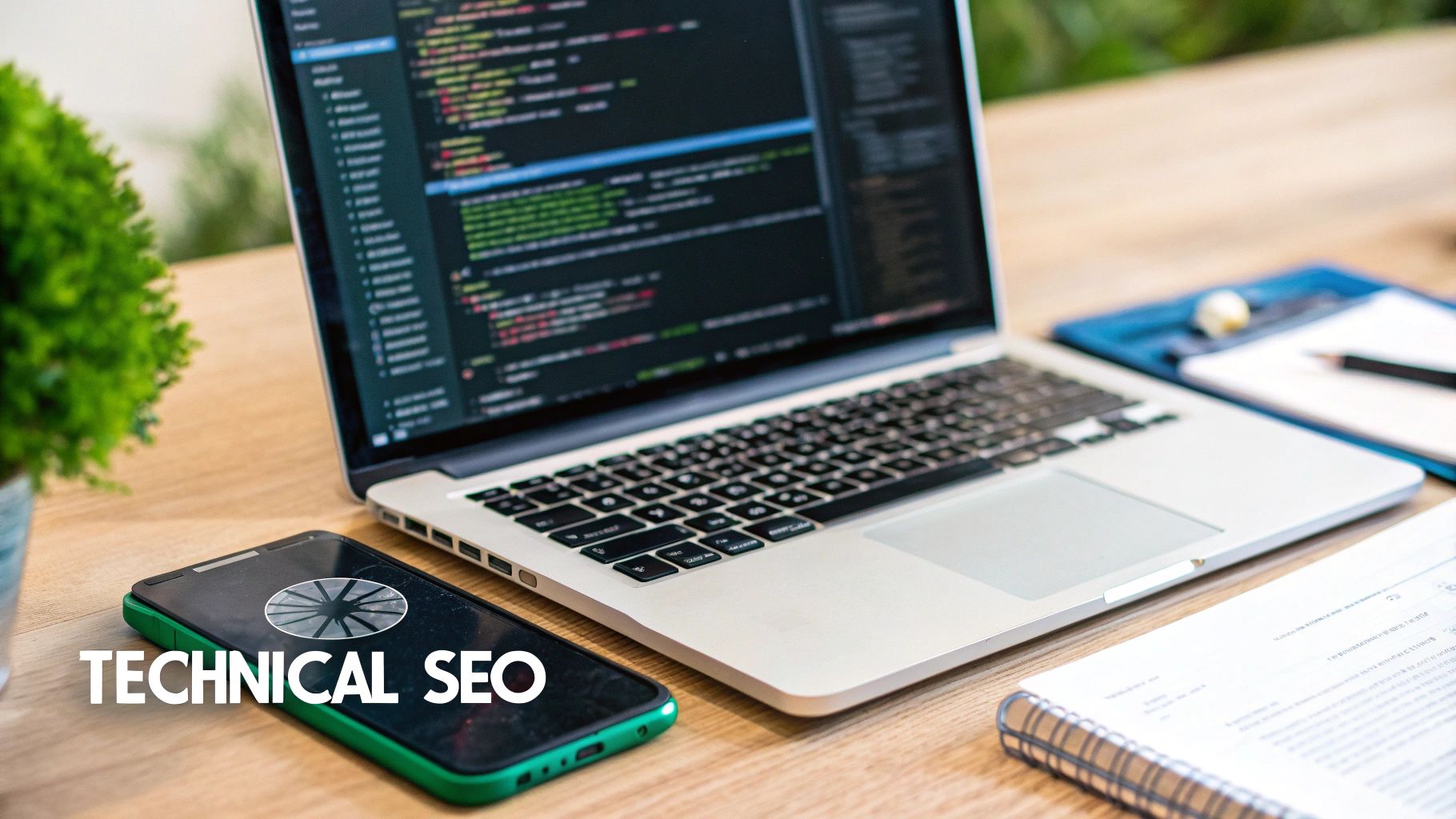
A stunning web design, like those beautiful shopfronts you see on Noosa's Hastings Street, doesn't mean a thing if customers can't find you. It’s the same story online. This is where technical ecommerce SEO comes in—it’s the foundational plumbing and electrical work that makes your online store visible and functional for search engines like Google.
As an award-winning web design-first agency with strong SEO marketing skills, we know a high-performing site has to be as technically sound as it is visually appealing. It’s all about building a website that performs flawlessly behind the scenes.
Building a Fast and Mobile-First Experience
In Australia, the shift to mobile shopping isn’t a trend; it's the new standard. Mobile commerce has absolutely exploded, with 95% of shoppers using smartphones for purchases. In fact, phones accounted for a massive 77% of eCommerce site visits and 68% of orders in a recent quarter.
Google’s mobile-first indexing now prioritises the mobile version of your site, which means a slow, clunky experience will cause your rankings to plummet. Site speed is a massive part of this; a slow store costs you both customers and rankings.
Here are the core areas we focus on for our Sunshine Coast and Brisbane clients to nail site speed:
- Image Optimisation: Large, uncompressed images are the number one killer of fast load times. We always use modern formats like WebP and make sure images are sized correctly before they get uploaded.
- Lean Code: Bloated themes and too many apps on platforms like Shopify or plugins on WooCommerce can drag your site to a crawl. It pays to regularly audit and remove anything you don't absolutely need.
- Effective Caching: For WordPress users, a powerful caching solution is non-negotiable. It pre-builds your pages so they can be served to users almost instantly. You can check out our detailed WP Rocket review to see how the right tool makes a huge difference.
Clean Structures Search Engines Love
A logical site structure helps both your customers and search engines navigate your store effortlessly. Think of it as creating clear aisles and signage in a physical shop.
Clean, descriptive URLs are a huge part of this. An address like /products/womens-linen-shirt-white is far more effective and user-friendly than /cat/prod?id=81735.
Another critical piece of the puzzle is managing duplicate content. Ecommerce platforms often create multiple URLs for the same product (like when you apply filters), which confuses search engines. Using canonical tags is the fix—it tells Google which URL is the "master copy" to index, preventing penalties and consolidating your ranking power.
A well-organised site isn't just a "nice-to-have." It’s a direct signal to Google about your store's quality and authority, which fundamentally impacts how you rank for competitive keywords.
To keep your technical SEO in check, we've put together a quick-reference checklist. Use it to audit the core elements of your online store and ensure you’re meeting Google’s standards.
Essential Technical SEO Checklist for Ecommerce
| Technical Element | Priority Level | Key Action |
|---|---|---|
| Mobile-First Design | High | Ensure your site is fully responsive and provides a seamless experience on all devices. |
| Site Speed | High | Optimise images, leverage caching, and minimise code bloat for load times under 2 seconds. |
| HTTPS Security | High | Install an SSL certificate to secure your entire site and build user trust. |
| Clean URL Structure | Medium | Use simple, descriptive URLs that are easy for both humans and search engines to read. |
| XML Sitemap | Medium | Generate and submit an up-to-date XML sitemap to Google Search Console for efficient indexing. |
| Robots.txt File | Medium | Configure your robots.txt file to guide search engine crawlers and block non-public pages. |
| Structured Data (Schema) | High | Implement Product, Review, and FAQ schema to enable rich snippets in search results. |
| Duplicate Content | High | Use canonical tags to specify the primary version of pages with similar content. |
| Broken Links (404s) | Medium | Regularly scan for and fix broken internal and external links to improve user experience. |
Ticking these boxes lays a rock-solid foundation, ensuring your store is built to be found.
Unlocking Rich Results with Structured Data
Structured data, also known as Schema markup, is a special code vocabulary you add to your site. It doesn't change how your site looks, but it helps search engines understand your content on a much deeper level. For an ecommerce business, this is a game-changer.
By implementing product schema, you can unlock rich snippets in search results—those eye-catching listings with star ratings, pricing, and stock availability displayed right there on Google. This makes your products impossible to ignore and can seriously boost your click-through rate.
For example, a Brisbane-based coffee roaster using schema could have their product show up with:
- ★★★★★ (28 reviews)
- Price: $18.50
- In stock
This level of detail gives you a massive competitive edge before a user even clicks your link. It builds trust and entices them to visit your page over a competitor's plain listing. Both Shopify and WooCommerce have apps and plugins that make adding this powerful feature straightforward, turning your standard search results into compelling mini-advertisements.
Optimising Product And Category Pages That Convert
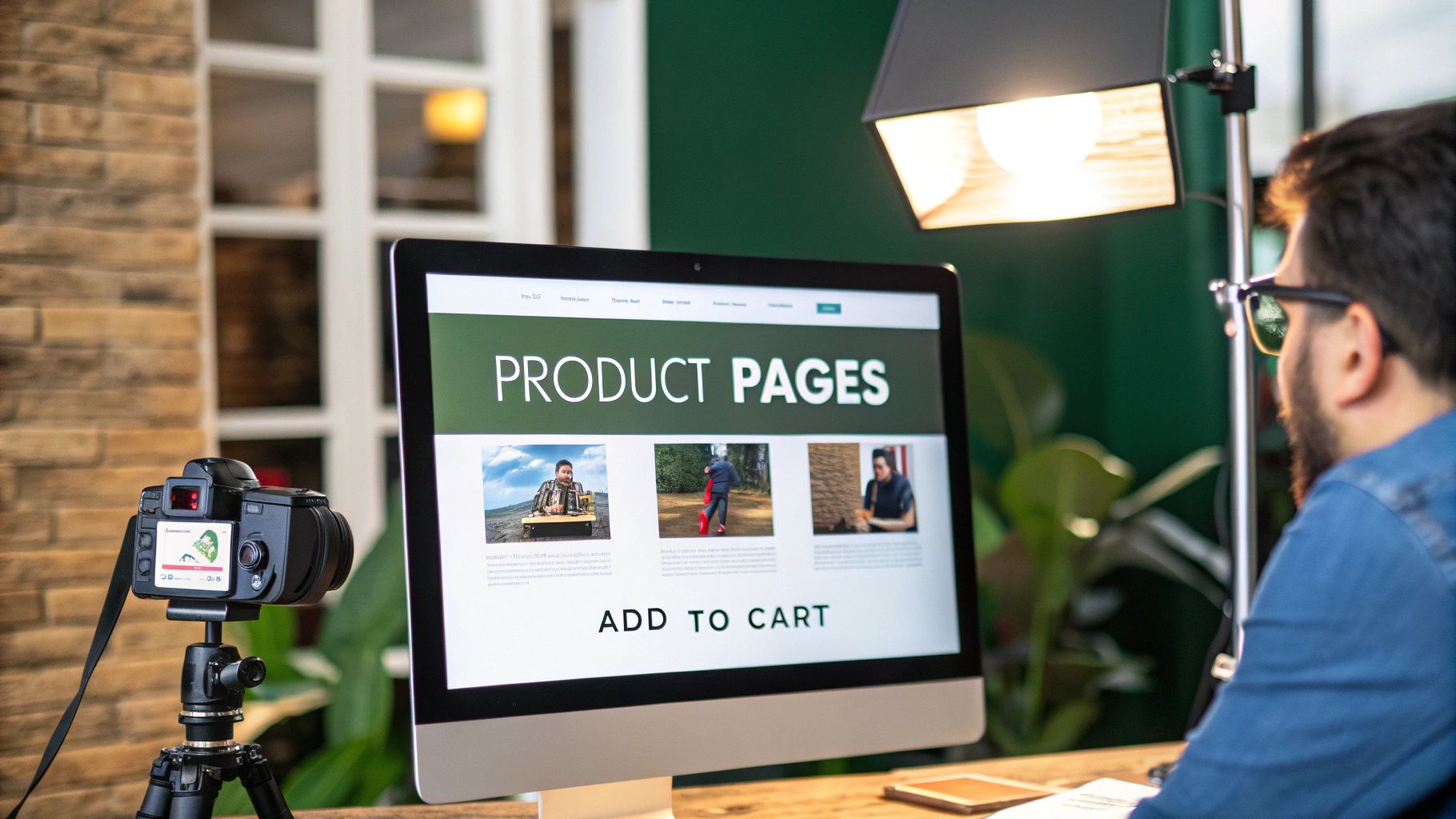
Let’s be honest, your product and category pages are the digital shop floor of your business. For any e-commerce brand, especially those competing in bustling markets like the Sunshine Coast, Noosa, and Brisbane, this is where a browser becomes a buyer. Optimising these pages goes way beyond just dropping in a few keywords; it's about turning them into high-performance assets that pull in qualified traffic and, most importantly, drive sales.
As an award-winning, web design-first agency with powerful SEO marketing skills, we've seen it time and again: the most successful online stores treat these pages as their primary sales tool. It's the critical intersection where compelling copy, stunning visuals, and user trust all come together to make a sale happen.
Crafting Compelling Product Descriptions
One of the most common mistakes we see is businesses simply copying and pasting generic, supplier-provided descriptions. This is a double whammy: it creates duplicate content issues that can torpedo your rankings and completely misses a golden opportunity to connect with your customer. A great product description doesn't just list features; it sells a solution or an experience.
Instead of just stating "100% cotton t-shirt," a Brisbane-based fashion brand should be writing something like, "Stay cool through the humid Brisbane summer in our incredibly breathable 100% organic cotton tee." See the difference? That simple shift connects the product's benefit directly to the customer's real-world needs.
To really elevate your descriptions, focus on these points:
- Answer unspoken questions: What might a customer be worried about? Sizing, how the material feels, care instructions? Get ahead of their concerns.
- Use sensory language: Help the customer imagine holding and using the product. Words like "soft," "lightweight," or "rich" create a much more tangible picture.
- Break up the text: Nobody wants to read a solid wall of text. Use bullet points, short paragraphs, and bold text to highlight key benefits and make the information easy to scan.
The Power Of High-Quality Visuals
In e-commerce, your product photos have to do all the heavy lifting that a physical product display would. Poor-quality, low-resolution, or generic images can instantly shatter trust and make your entire brand look unprofessional. Customers want to see your products from multiple angles, in context, and with zoom capabilities to inspect every detail.
High-quality product imagery is non-negotiable for success. Mastering techniques like flat lay photography can present products attractively and professionally, which has a direct influence on purchase decisions. Just remember to optimise your images for the web by compressing them and using descriptive alt text—this helps with both accessibility and image search SEO.
A product page with a single, blurry photo is the online equivalent of a dusty, poorly-lit shelf in a physical store. Investing in professional photography or learning to take great shots yourself is one of the highest-return activities for any e-commerce business.
Building Trust Through Social Proof
Shoppers are naturally sceptical, and customer reviews are the most powerful tool you have to overcome that hesitation. Displaying genuine reviews and ratings directly on your product pages provides immediate social proof, showing potential buyers that other people have bought and loved the product.
In fact, the data is clear: products with reviews have significantly higher conversion rates. This user-generated content also adds fresh, relevant text to your pages, which search engines love. Don't be passive—encourage customers to leave reviews through post-purchase email follow-ups and make the submission process as simple as possible.
Structuring Category Pages For Easy Navigation
While product pages close the deal, your category pages are crucial for guiding users on their shopping journey. A well-structured category page helps customers find what they're looking for without getting frustrated, which reduces bounce rates and improves their overall experience.
Think of your category pages as the main aisles of your store. They should be logically organised and offer helpful filtering options. For a Noosa-based swimwear store, filters like "Size," "Colour," "Style (One-Piece, Bikini)," and "Feature (Sun-Protective)" are absolutely essential.
And don't forget to add a short, helpful introduction at the top of your category pages. This is the perfect spot to include target keywords naturally and provide context for shoppers. For example, a brief paragraph about your "Women's Linen Clothing" collection can set the scene and seriously improve the page's SEO value.
This meticulous attention to detail is a core part of our approach when we design and build high-converting ecommerce websites for our clients. By perfecting these foundational pages, you create a seamless path from discovery to purchase, turning search engine traffic into tangible revenue.
Once your technical SEO and product pages are humming along, you’ve built a fantastic foundation. But to really start dominating the search results and become a known name in competitive spots like Brisbane or the Sunshine Coast, you need to build authority.
This is where a smart one-two punch of valuable content and high-quality backlinks comes into play. It’s the difference between having a shop and building a brand.
Think of it this way: content is your growth engine. It’s what grabs the attention of customers long before they’re even thinking about buying, answering their questions and positioning you as the expert. Link building, on the other hand, is like getting votes of confidence from other respected websites. Google sees those votes and starts to realise your store is a trustworthy and important player.
Creating Content That Actually Connects with Local Shoppers
Here’s a crucial distinction many stores miss: your product pages are built to sell, but your content should be built to help.
By creating content that genuinely solves problems for your target audience, you pull in highly qualified traffic and start building a real connection with potential customers across the Sunshine Coast, Noosa, and Brisbane. The goal is to stop just selling and start educating. That’s how you build trust and stay top-of-mind for when they are ready to pull out their wallet.
Here are a few content types that get incredible results:
- In-Depth Buying Guides: A Noosa-based swimwear brand could knock it out of the park with a guide like, "The Ultimate Guide to Choosing Sun-Safe Swimwear for Queensland Kids." This targets a very specific long-tail keyword and solves a real-world problem for local parents.
- Helpful Comparison Articles: If you sell coffee beans, an article comparing "Single Origin vs. Blends for Your Morning Brew" helps people make a better decision and shows off your product range without being pushy.
- Localised "Best Of" Lists: Imagine a Brisbane-based gift shop publishing "The 5 Best Locally Made Gifts for a Housewarming in Brisbane." This kind of content is incredibly shareable and is pure catnip for attracting valuable local links.
Think of your content as your best salesperson—the one who’s incredibly knowledgeable and helpful. It works 24/7, answering questions, building trust, and gently guiding people to the perfect product for their needs.
White-Hat Link Building, Demystified
Link building often gets a bad rap for being overly technical or sketchy, but the core idea is simple: build relationships and provide value.
When a respected website links to your store, Google sees that as a powerful endorsement. A steady flow of these endorsements is one of the most potent ranking factors in all of SEO. Forget the spammy, outdated tactics of the past. Today, it’s all about earning links naturally through genuine outreach and by creating things people want to link to. As an award-winning agency, we know first-hand that a sustainable, white-hat strategy is the only path forward.
Practical Ways to Start Earning Quality Backlinks
Getting started with link building doesn’t mean you need a massive budget. What it really requires is a strategic mindset and a bit of good old-fashioned community engagement.
For businesses on the Sunshine Coast or in Brisbane, leaning into your local identity can be a superpower.
- Team Up with Local Influencers: Partner with a Brisbane food blogger or a Sunshine Coast lifestyle influencer. A simple product review from them can drive sales, provide social proof, and land you a valuable backlink from their site.
- Get Featured in Local Publications: Outlets like The Urban List or Style Magazines are constantly on the hunt for new local brands to feature. Reach out with a compelling story about your business and why their readers would love what you do.
- Create "Link-Worthy" Assets: Develop a unique resource that others in your industry will want to share and reference. This could be original research (e.g., "The Top 5 Sustainable Fashion Trends in Australia") or a detailed how-to guide that becomes the definitive piece on a topic.
- Sponsor a Community Event: Sponsoring a local Noosa charity run or a Brisbane market is a great way to build goodwill. It also almost always results in a link from their website, boosting both your community standing and your domain authority.
This combined approach—creating genuinely helpful content and earning authoritative links—is what elevates a store from just getting by to becoming a true market leader. It doesn’t just improve your rankings; it solidifies your brand as the go-to expert in your niche.
Measuring Success and Refining Your Ecommerce Strategy
Launching your campaigns and optimising your store is just the beginning. The real growth in ecommerce doesn't come from a 'set and forget' approach; it’s a dynamic, data-driven process of continuous improvement.
What really separates the leaders from the pack, especially in competitive markets like the Sunshine Coast, Noosa, or Brisbane, is understanding what’s working, what isn’t, and being smart enough to refine your approach based on real customer behaviour.
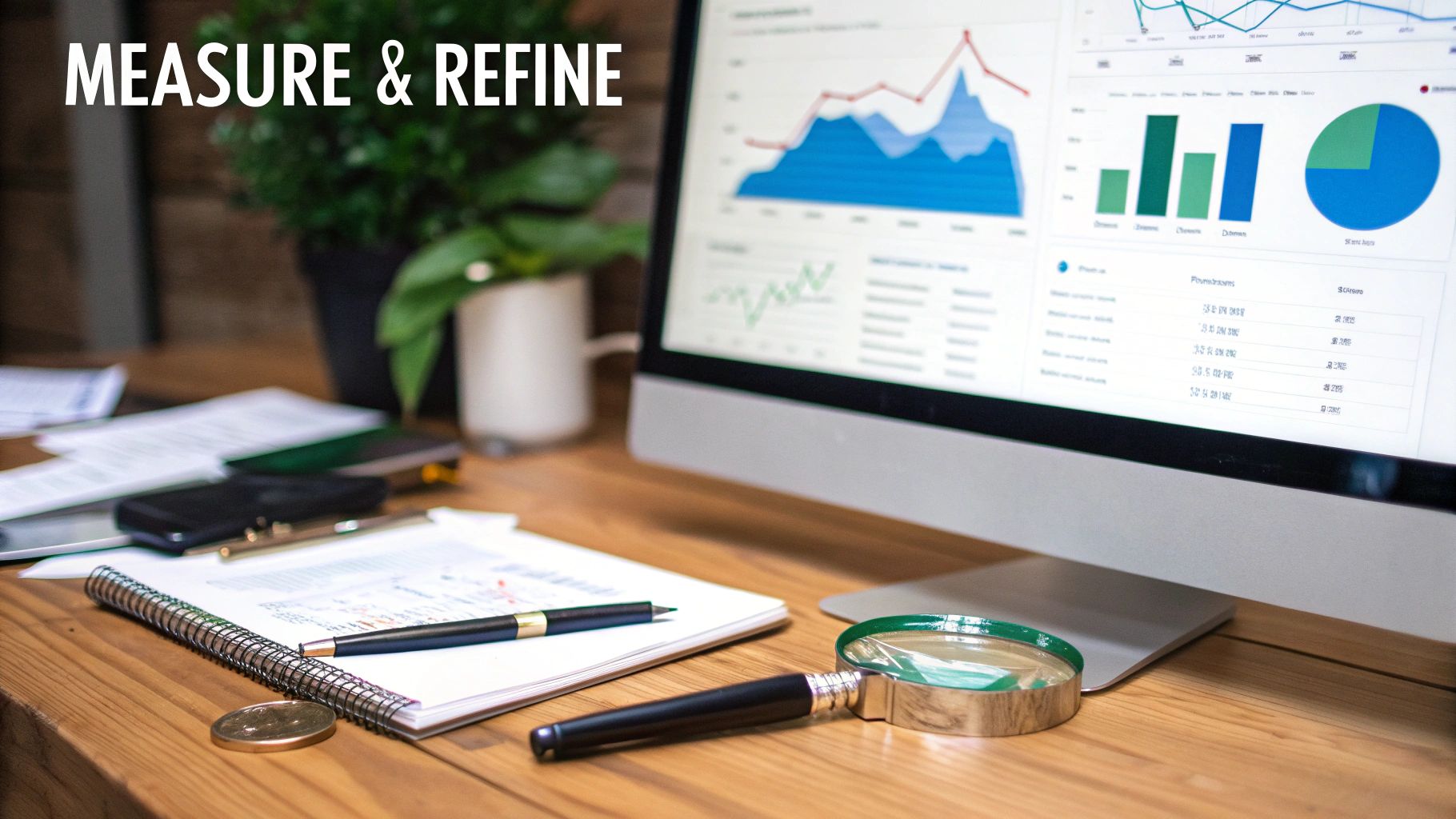
As an award-winning web design-first agency with strong SEO marketing skills, we've learned that data tells a story. It shows you exactly how customers find you, what they do when they arrive, and where they get stuck. Learning to read that story is how you make smarter decisions that directly boost your bottom line.
Setting Up Your Measurement Toolkit
Before you can start tweaking anything, you need the right tools to collect accurate data. The good news is, the most powerful ones are completely free and absolutely essential for any online store.
Your core toolkit will be:
- Google Analytics 4 (GA4): This is your mission control for understanding website traffic. GA4 tracks where your visitors come from (organic search, social media, etc.), which pages they visit, and how they interact with your site. Setting up ecommerce tracking in GA4 isn't optional—it's how you'll monitor crucial metrics like conversion rates and revenue from your SEO efforts.
- Google Search Console (GSC): This tool gives you priceless insights into how your site performs specifically in Google Search. It shows you which keywords are bringing people to your site, flags technical problems like crawling errors, and lets you keep an eye on your backlink profile.
Think of it like this: GA4 tracks everything that happens on your website, while GSC tracks what happens before someone even gets there—in the search results. Using them together gives you the complete picture of your ecommerce performance.
Key Metrics That Truly Matter
With your tools in place, it’s time to tune out the noise. It’s easy to drown in a sea of data, but a handful of key performance indicators (KPIs) will tell you almost everything you need to know.
The opportunity here is massive. Australians recently spent a staggering AU$69 billion on ecommerce, a huge 12% increase from the previous year. For businesses like yours on the Sunshine Coast, in Noosa, and across Brisbane, this just confirms the enormous potential waiting to be unlocked. You can read more about the booming Australian ecommerce landscape and its opportunities.
Here are the core metrics to watch like a hawk:
- Organic Traffic: This is simply the number of visitors landing on your site from unpaid search results. A steady, upward trend here is the clearest sign your SEO strategy is gaining traction.
- Conversion Rate: The percentage of those organic visitors who actually complete a purchase. This is the ultimate test of whether you're attracting the right kind of traffic and if your product pages are doing their job.
- Average Order Value (AOV): The average amount a customer spends in a single transaction. Bumping this up with smart cross-sells and upsells can skyrocket revenue without needing a single extra visitor.
- Keyword Rankings: Keep track of your position in search results for your most important commercial keywords. Use GSC to see which queries you're already ranking for and spot those "striking distance" keywords on page two that a little push could get onto page one.
The Power Of Incremental Improvement with A/B Testing
Once you have a baseline from your data, you can start refining things through testing. A/B testing, or split testing, is a simple but incredibly powerful way to improve your conversion rates.
It just involves creating two versions of a page (Version A and Version B) and showing them to different groups of your audience to see which one performs better.
You don't need fancy software to get started. You can run simple but effective tests on key elements of your product pages, such as:
- Headlines: Try a benefit-driven headline ("Get Flawless Skin in 7 Days") against a more feature-focused one ("Advanced Vitamin C Serum").
- Product Images: See if a lifestyle photo of your product in use converts better than a standard shot on a white background.
- Call-to-Action (CTA) Button: Experiment with the text ("Add to Cart" vs. "Buy Now") or even just the colour of the button.
By making small, data-backed changes over time, you can achieve huge gains in your conversion rates. This continuous loop of measuring, testing, and refining is what ensures your ecommerce marketing efforts deliver the maximum possible return and keep you one step ahead of the competition.
Common Questions About Ecommerce SEO in Australia
Navigating the world of ecommerce SEO can feel like a minefield, especially when you're a business owner focused on serving customers in specific areas like the Sunshine Coast, Noosa, and Brisbane. As an award-winning web design-first agency with deep expertise in SEO marketing, we hear the same questions time and again.
Let's clear the air and give you some straight, honest answers to the most common queries we get.
How Long Does It Take to See Results from Ecommerce SEO?
This is always the first question, and the honest answer is that SEO is a long-term investment, not an overnight fix. While some technical tweaks can deliver small, noticeable changes in a matter of weeks, a proper ecommerce SEO strategy typically needs four to six months to start delivering significant, lasting growth.
That timeframe gives search engines like Google the chance to crawl, index, and fully understand all the improvements you’ve made. It also allows time for your new content to gain authority and for your link-building efforts to start paying off. For competitive keywords in a bustling market like Brisbane, patience and consistent effort are absolutely essential.
For a Shopify Store, Is Technical SEO or Content Marketing More Important?
Thinking you have to choose between technical SEO and content marketing is a really common mistake. The reality is, they are two sides of the same coin. Both are critical for any successful ecommerce store, whether it’s built on Shopify, WooCommerce, or another platform.
- Technical SEO is the foundation. It ensures your store is fast, mobile-friendly, and easy for search engines to crawl and understand. Without a solid technical base, even the best content in the world won’t reach its full potential.
- Content marketing is the engine. This is what builds your brand's authority, attracts new customers, and engages your audience. It’s how you answer questions and build trust with shoppers from Noosa all the way down to Brisbane.
A technically sound site allows your brilliant content to shine and deliver the maximum possible impact. One simply cannot be effective without the other.
The most successful online stores don't choose between technical excellence and compelling content—they excel at both. Your website must perform flawlessly for search engines while also telling a story that resonates with your customers.
How Much Should a Small Sunshine Coast Business Budget for Ecommerce SEO?
Budgeting for ecommerce SEO marketing can be tricky because there's no single price tag that fits everyone. It really depends on your specific industry, how fierce the competition is, and what your growth goals are.
For a small business on the Sunshine Coast looking to partner with a reputable local agency, a realistic investment might range from $1,500 to $5,000+ per month. This level of investment typically covers essential activities like a comprehensive technical audit, ongoing on-page optimisation, strategic content creation, and building your site's authority through link acquisition.
It's vital to see this as an investment in a revenue-generating asset, not just another business expense. Quality ecommerce SEO drives sustainable organic traffic, which translates directly into long-term sales and a stronger, more resilient business. It reduces your reliance on paid ads and builds a powerful, independent channel for bringing in new customers.
Ready to turn your website into a powerful sales engine that captures the Sunshine Coast, Noosa, and Brisbane markets? At Digital Roo's, our award-winning team blends expert web design with powerful ecommerce SEO marketing to deliver measurable growth. Let's build a stronger website and a stronger business, together. https://digitalroos.com