
Finding the right web design Perth agency isn't just about picking a supplier; it’s about choosing a partner to build your most important digital asset. A great website is far more than an online brochure. It's the central hub of your business growth, the place where you connect directly with your local Sunshine Coast, Noosa, and Brisbane audience.
Why Your Business Needs a Strategic Website
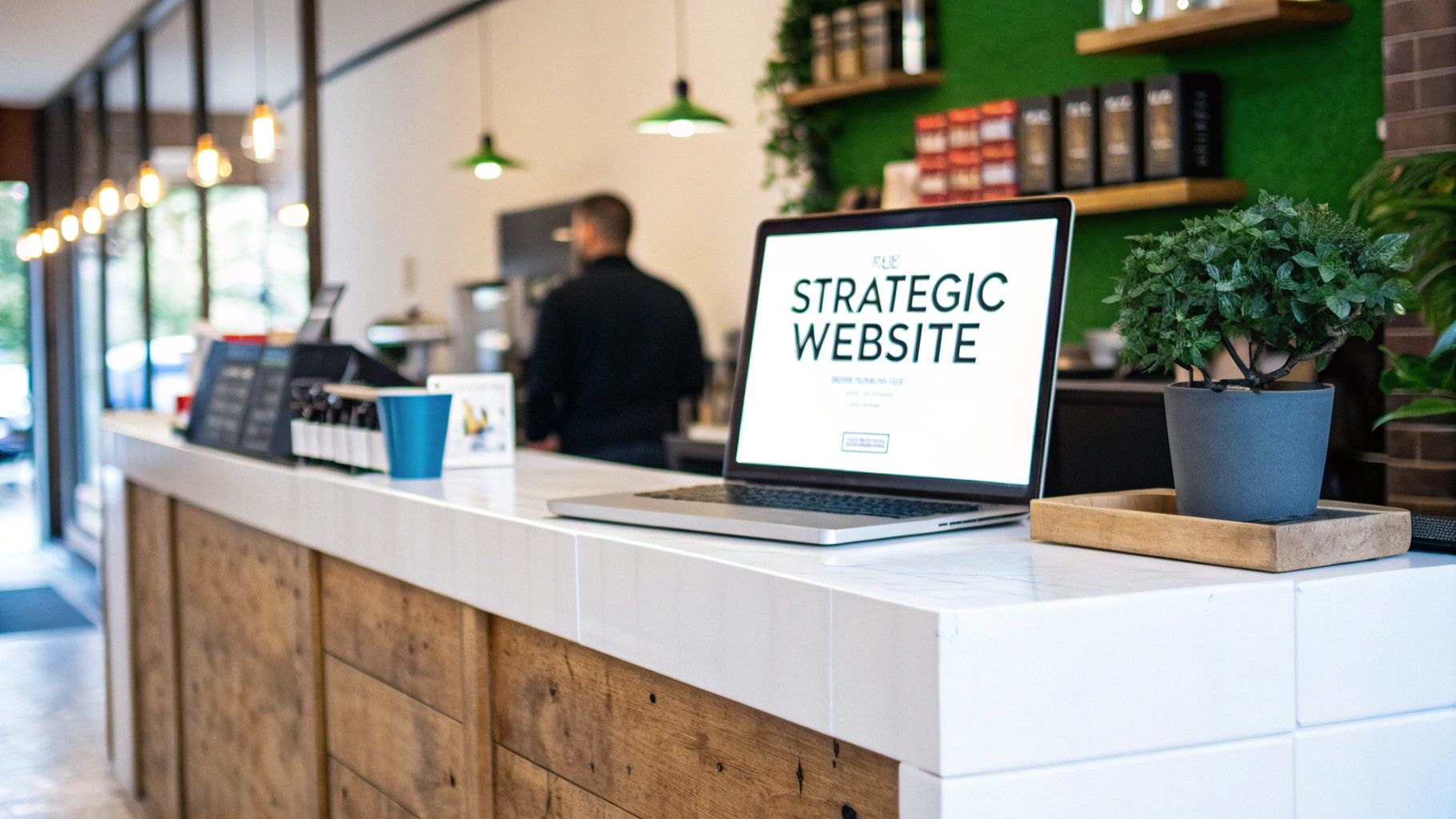
In the unique markets of the Sunshine Coast, Noosa, and Brisbane, a generic, off-the-shelf website just doesn’t cut it. Your online presence has to be crafted to attract, engage, and convert local customers. Think of your website as your 24/7 salesperson and brand ambassador, working tirelessly to generate leads and build trust while you sleep.
As an award-winning agency, we understand this from the ground up. Our web design-first approach, backed by powerful SEO marketing skills, ensures your site isn't just visually stunning but is also a high-performing engine for growth.
More Than Just a Pretty Design
A truly effective website is where beautiful design meets smart functionality and a solid game plan. It’s about creating a seamless user experience that guides visitors toward taking a specific action—whether that’s making a purchase, filling out a form, or picking up the phone to call you. Nailing this requires a deep dive into your business goals and the real-world behaviour of your target audience.
To see real, sustainable growth, a business needs a strong foundation online, which means putting proven small business marketing tips into action. A strategic website is where all those efforts come together.
The demand for quality web design is booming for a reason. Across Australia, the web design and development market pulled in $679.51 million in sales revenue, with projections showing a compound annual growth rate of 10.2% through 2031. This just goes to show how critical a professional online presence has become for businesses of all sizes.
Your website is often the very first interaction a potential customer has with your brand. A strategic design makes sure that first impression is a powerful one, establishing credibility and encouraging them to stick around from the very first click.
Our team is focused on delivering tangible results for businesses across Australia, and this guide is designed to give you a clear roadmap. We're here to demystify the entire process of getting a top-tier web design Perth.
Understanding Web Design Costs
Let’s get straight to it: the first question every business owner asks is, "So, what's this going to cost me?" When it comes to professional web design, there’s no single, off-the-shelf price. The real answer is a range, shaped by your goals, how complex your project is, and the level of custom work needed to make your brand truly shine.
Think of it like building a house. You could go with a project home—a standard plan with basic finishes. Or you could hire an architect to design a custom home with all the high-end features you’ve dreamed of. Both give you a house, but the investment, timeline, and final result are worlds apart. Web design works on the exact same principle.
Ultimately, the quote you get is a direct reflection of the time, skill, and resources required to build your digital home.
Key Factors That Shape Your Quote
The final number on a web design quote is a sum of its parts. Once you understand these core components, you can set a realistic budget and see the genuine value behind the investment. Any transparent agency will happily walk you through how these factors add up.
Here are the main things that drive the cost:
- Custom Design vs Templates: A custom design is a bespoke suit, tailored perfectly to your brand and your customers. A template is more like buying off the rack—it's quicker and cheaper, but it will never fit as well and you’ll likely see others wearing the same thing. Custom work is always a bigger investment upfront.
- Number of Pages: It’s simple maths. A clean, five-page brochure site will cost less than a sprawling 50-page corporate website with detailed service sections and an extensive blog. Every single page needs design, development, and content work.
- Required Functionality: Do you just need a simple contact form? Or are you after something more complex, like an online booking system, a private client portal, or custom-built calculators? Each piece of advanced functionality adds development time and complexity.
- E-commerce Capabilities: Setting up an online shop is a serious project. It involves creating product pages, integrating secure payment gateways, managing inventory, and building a seamless checkout process. This makes it one of the most significant investments in web development.
For businesses looking to sell online, it’s really helpful to get a specific breakdown of the numbers involved. Digging into typical e-commerce website development costs can give you a much clearer picture of what to budget for.
Typical Web Design Investment
To give you a clearer idea of what to expect, the web design market has some pretty established price points. The table below breaks down the typical packages you'll find, helping you match your needs with a realistic budget.
A website isn't just a business expense; it's a direct investment in your future growth. A well-built site from a professional agency should deliver a return far greater than its initial price tag through more leads, more sales, and stronger brand credibility.
The key is to find a package that not only fits your budget today but also gives your business room to grow tomorrow.
Typical Web Design Investment
| Website Type | Ideal For | Common Features | Average Price Range |
|---|---|---|---|
| Starter / Brochure | Startups, sole traders, and businesses needing a basic online presence. | 3-5 pages (Home, About, Services, Contact), responsive design, basic SEO setup, contact form. | $3,000 – $8,000 |
| Small Business | Growing businesses looking to generate leads and showcase their work. | 5-10 pages, custom design elements, blog integration, CMS for easy updates, advanced on-page SEO. | $5,000 – $8,000 |
| Premium / Corporate | Established businesses requiring custom features and a high-end user experience. | 10+ pages, fully custom UI/UX design, advanced functionality (e.g., booking systems), content strategy. | $8,000 – $15,000+ |
| E-commerce | Businesses wanting to sell products or services directly online. | Secure payment gateway, product management, inventory system, customer accounts, full shopping cart functionality. | $8,500 – $25,000+ |
As you can see, the investment lines up directly with the complexity and scale of the project. A simple brochure site is perfect for getting started, while a premium or e-commerce build is designed to be a powerful, lead-generating machine for an established business.
Core Services of a Top Web Agency
A high-performing website is much more than just a pretty design. Think of it as a carefully engineered machine, built from a whole range of specialised, interconnected services. When you partner with a leading web design agency, you’re not just buying a look; you’re investing in a team of experts who know how to blend creativity with technical precision.
Their core services are the building blocks of a powerful digital asset that works for your business 24/7. This isn't just a checklist of tasks. It's a strategic approach to building a website that looks professional, functions flawlessly, and actually engages the people you want to reach, ultimately driving real growth for your business.
The Foundation: User Experience and User Interface
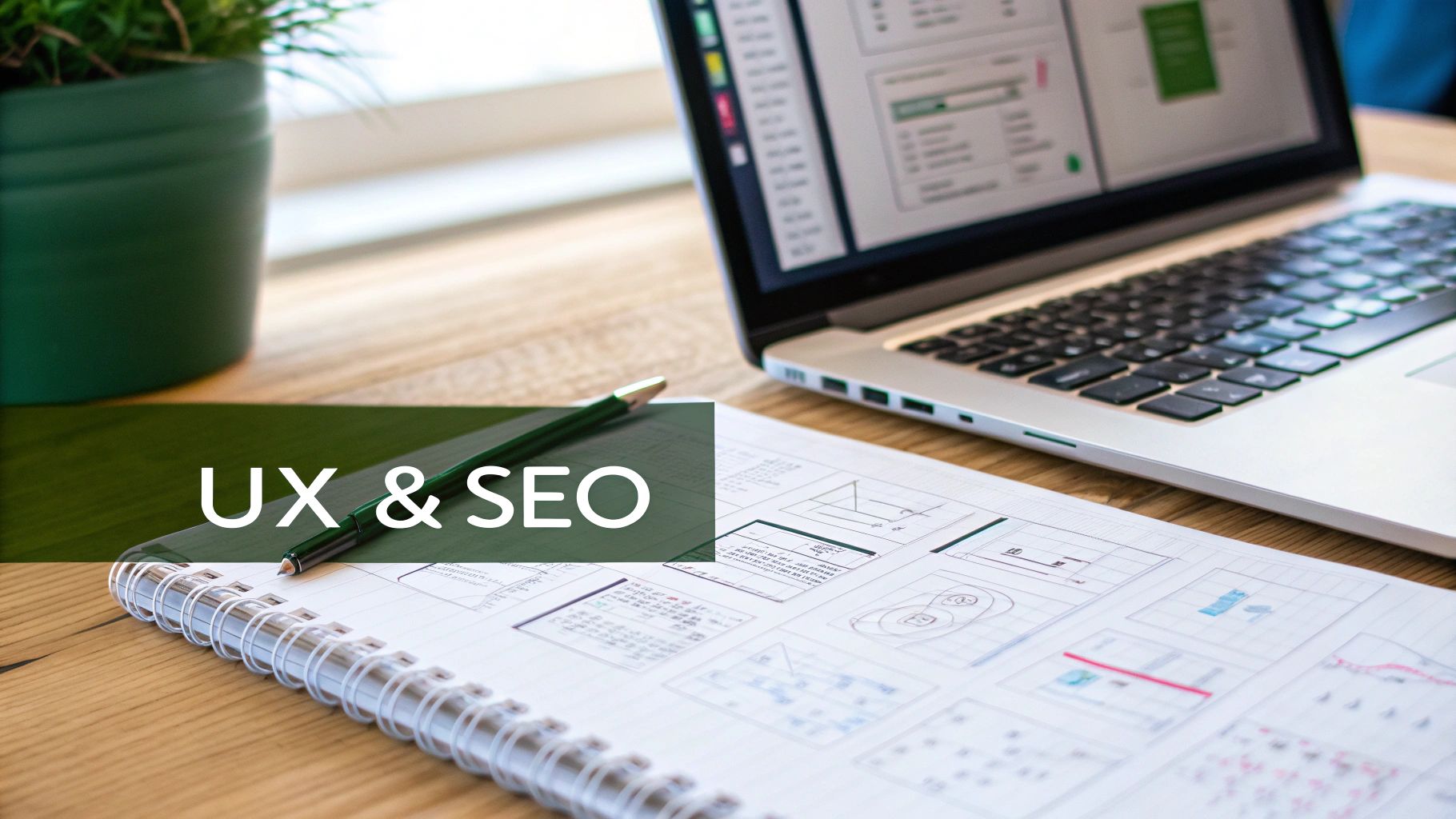
At the heart of any great website are two disciplines that sound similar but do very different jobs: User Experience (UX) and User Interface (UI). The easiest way to think of them is as the architect and the interior designer of your digital space. You need both to get it right.
User Experience (UX) design is the architectural blueprint. It’s all about the logic and feel of the user's journey. A UX designer maps out how someone will move through your site, making sure the path from the homepage to making a purchase is intuitive, easy, and completely frustration-free.
User Interface (UI) design, on the other hand, is the interior design. This covers all the visual bits a user actually interacts with—the buttons, the menus, the typography, and the colour palette. The UI designer makes sure the site is visually appealing and that its look lines up perfectly with your brand.
A website with slick UI but poor UX is like a stunningly decorated restaurant with a confusing layout and terrible service. On the flip side, great UX with poor UI is like a highly efficient but plain-looking canteen. You need both working together to create an experience that people love.
A top agency will treat UX and UI as the non-negotiable foundation of your project. This ensures your site isn't just beautiful, but also incredibly effective at guiding visitors towards your business goals.
Critical Components of Modern Web Development
Once the design blueprint is locked in, the development team steps in to bring it all to life with clean, efficient code. Modern web development is about building a site that’s robust, flexible, and ready for whatever comes next. For any business today, three components are absolutely essential.
First up is responsive design. With more people browsing on their phones than ever before, a mobile-friendly website is no longer a "nice-to-have"—it's mandatory. Responsive design ensures your website automatically adjusts its layout to look great and work perfectly on any device, from a huge desktop monitor to the smallest smartphone screen.
Next is the power of a Content Management System (CMS). A CMS like WordPress gives you the keys to your own website. It lets you easily update text, add new blog posts, or swap out images without needing to call a developer every time. This control is vital for keeping your content fresh and relevant—a huge factor for search engine optimisation (SEO).
Finally, for any business selling products online, seamless e-commerce integration is everything. This is about more than just sticking a "buy now" button on a page. It means building a secure, user-friendly online store with proper inventory management, trusted payment gateways, and a checkout process that’s smooth and simple. A professional e-commerce setup is the engine that drives your online revenue.
You can find out more about our award-winning websites and see how we integrate these core services to build powerful digital platforms for businesses.
How to Choose the Right Web Design Partner
Picking the right agency is the single most important decision you'll make in this entire process. The market is brimming with talented creatives, but the perfect partner does a lot more than just build pretty websites—they build the foundation for your business's future. This one choice is the difference between an online brochure and a genuine, lead-generating machine.
It’s about looking past the slick sales pitch and digging into the actual proof of what they can do. Having a clear, practical framework helps you cut through the noise and find a team that not only gets your vision but has the chops to bring it to life and make sure it gets seen.
Start with the Portfolio
An agency’s portfolio is their resume in action. It’s the most direct proof you’ll get of their design style, technical skill, and the overall quality of their work. But don’t just flick through looking for nice pictures; you need to look at it with a strategic eye.
Look for variety, but more importantly, look for relevance. Do they have experience in your industry or something similar? A portfolio packed with stunning restaurant websites is great, but those skills might not translate if you're a B2B industrial supplier. Check if their designs feel modern, are easy to use, and—crucially—if they align with the professional image you want for your brand.
- Industry Experience: Have they done projects like yours before?
- Design Quality: Does the visual appeal and finish of their work feel premium and consistent?
- Functionality: Don't just look. Click through their live client sites. Do they load quickly? Is navigation a breeze?
Verify Testimonials and Case Studies
Testimonials are a nice little glimpse into the client experience, but case studies tell the whole story. A positive quote is one thing, but a detailed case study shows you an agency’s ability to solve real business problems and deliver results you can actually measure. It peels back the curtain on their entire process.
A solid case study should walk you through the initial challenge, the strategy the agency came up with, how they executed the project, and the final outcomes. Look for hard data. Did they increase traffic by a certain percentage? Did online sales grow? This is the kind of proof that separates a good designer from a great digital partner.
Choosing a web partner is a big call, especially in WA's buzzing creative scene. The local creative workforce, which includes web designers, is 51,051 people strong, making up 3.9% of the total WA workforce. That's a massive pool of local talent, which makes it even more important to find an agency that genuinely stands out. You can get a better feel for the local industry by exploring insights on the creative industries in Western Australia.
Prioritise In-House SEO Expertise
Here’s a critical point that so many business owners miss: a beautiful website is completely useless if nobody can find it. That’s why you have to prioritise a web design-first agency that has strong, in-house SEO marketing skills. When the same integrated team handles both design and SEO, your site is built for visibility right from day one.
An agency that bolts on SEO as an afterthought will leave you playing catch-up for months after launch. A team like ours, which builds with SEO baked in from the start, makes sure your site structure, page speed, and content are all optimised to rank well on Google the moment you go live.
Ask the Right Questions
That first consultation isn't just a sales call; it's an interview. You’re hiring a key partner for your business, so you need to come prepared. Arming yourself with a few sharp questions will help you figure out their expertise, their process, and whether they're the right fit for you.
Key Questions to Ask a Potential Web Design Partner:
- What does your design and development process look like from start to finish? A good agency will have a clear, structured process they can walk you through.
- How do you build SEO into the web design process? The only right answer is "from the very beginning," not "oh, we can do that later."
- Who will be my main point of contact? Clear and consistent communication is non-negotiable for a smooth project.
- What sort of support and maintenance do you offer after the site goes live? A website is a living thing that needs ongoing care to perform at its best.
Following this framework will help you confidently navigate the process of finding the right web design partner—one who is genuinely invested in your long-term success.
The Web Design Process From Discovery to Launch
Once you’ve found your web design partner and signed on the dotted line, the real fun begins. A professional web design project isn't some mysterious process that happens behind a curtain; it’s a clear, structured journey that takes your idea and turns it into a fully functioning website. Knowing the roadmap helps set clear expectations and keeps things running smoothly for everyone involved.
Think of it like building a house. You wouldn't let a builder start throwing up walls without a solid foundation and a detailed blueprint. In the same way, a top-tier agency follows a methodical, phased approach to make sure every part of your website is built with purpose and precision, all leading up to a successful launch.
Phase 1: Discovery And Strategy
This first step is, without a doubt, the most important one. Before we even think about colours or fonts, we need to get to the heart of your business. This is more than just a quick chat; it's a strategic deep dive to understand your brand, who you're trying to reach, what your competitors are up to, and most importantly, what you want this website to do.
Are you after more leads? Higher sales? A stronger brand presence in your market?
The answers to these questions become the strategic foundation for the entire project. This phase usually involves workshops, questionnaires, and a bit of market research to lock down the project's scope, define the key performance indicators (KPIs), and draw up a clear roadmap. It’s all about making sure we’re all on the same page and working towards the same goals from day one.
Phase 2: Wireframing And Design
With a rock-solid strategy in place, the creative work can finally kick off. This phase is really broken into two key parts.
First up, our UX (User Experience) designers create wireframes. Think of these as the architectural blueprints for your website—simple, black-and-white layouts that focus purely on structure, user flow, and where content will sit. A wireframe shows where things like menus, buttons, and contact forms will go, ensuring the user's journey is logical and intuitive before any visual flair is added.
Once you’ve approved the wireframes, our UI (User Interface) designers step in to bring the site to life visually. This is where your brand's personality—your colours, typography, and imagery—gets applied to the blueprint. We create high-fidelity mockups that show you exactly how your finished website will look and feel, giving you the chance to provide feedback and request tweaks until it’s just right.
A well-structured web design process isn't just a series of tasks; it's a feedback loop. Your input during the wireframing and design stages is crucial for shaping a final product that not only meets technical standards but also genuinely reflects your brand's vision and connects with your audience.
This visual guide shows the simple yet crucial steps to take when evaluating potential partners for your project.
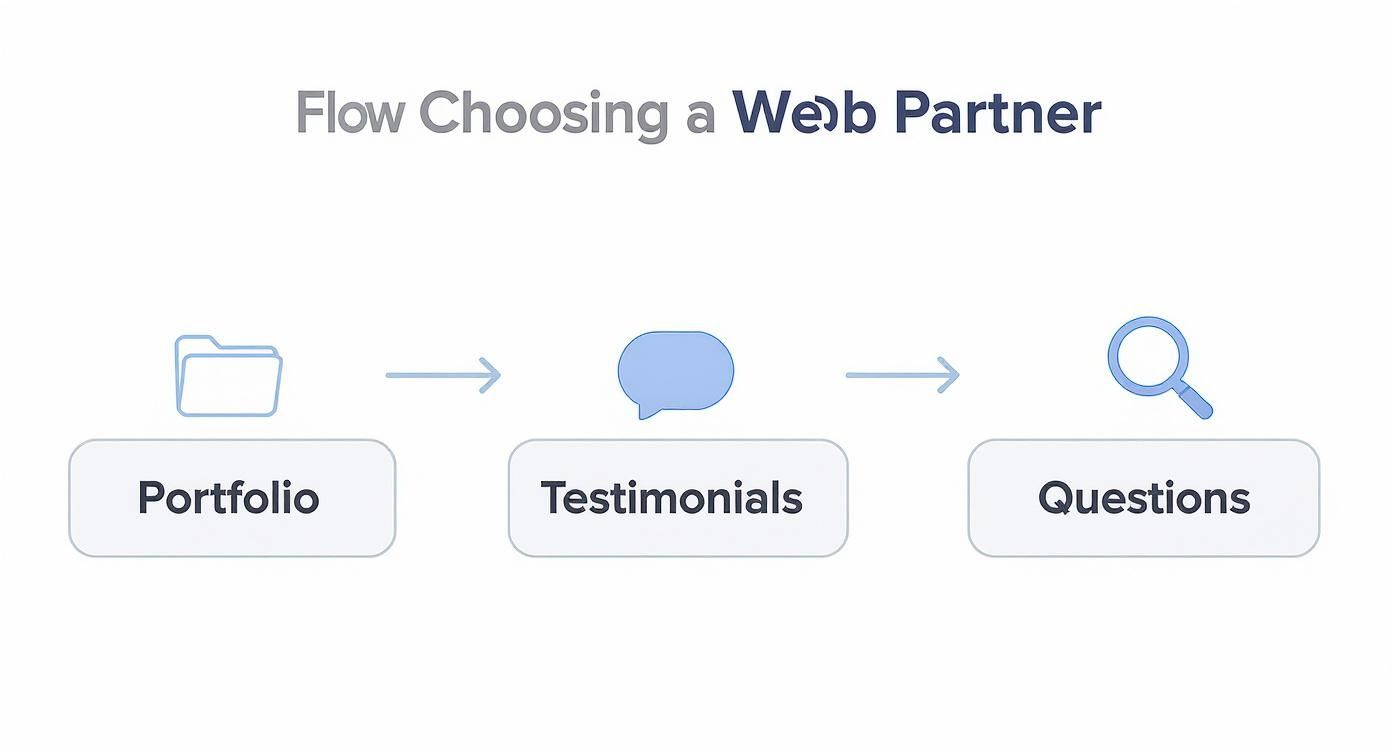
The flowchart highlights that a thorough review of past work, client feedback, and direct questioning forms a reliable framework for making an informed decision.
Phase 3: Development And Content Integration
After you’ve signed off on the final design, our developers take the wheel. They get to work writing the clean, efficient code that transforms those static visuals into a fully functional, interactive website. This is where the design truly comes to life, as the developers build out the responsive framework, custom features, and CMS integration that will power your site.
While the coding is underway, it's the perfect time to get your content ready. High-quality copy, professional images, and engaging videos are slotted into the site's pages. A great web design agency will guide you on creating content that is not only compelling for your visitors but also optimised for search engines.
Phase 4: Testing And Launch
The finish line is in sight, but one of the most critical steps is still ahead: rigorous testing. Before your website goes live, it goes through a comprehensive quality assurance (QA) process. We test it across different browsers (like Chrome, Safari, and Firefox), a range of devices from iPhones to desktops, and various operating systems to ensure it works flawlessly for every single user. We hunt for bugs, check for broken links, and iron out any performance issues.
Speed is a massive focus here. A slow website is a conversion killer, so we make sure everything is optimised for lightning-fast loading times. For a deeper look at performance, our guide on a WP Rocket review explains how caching tools can dramatically improve site speed.
Once the site passes every test and gets your final thumbs-up, it’s launch time! We handle the technical side of things, making your new website live for the world to see.
Finding a Partner, Not Just a Provider
Technical skills are just the starting point. The final, and arguably most important, part of finding the right web design Perth partner is choosing an agency that ties everything together—great design, flawless development, and a smart marketing strategy. This is where an award-winning agency really shows its value, moving beyond just aesthetics to build a digital platform that delivers genuine, measurable growth.
We’re proud to work with clients in the Sunshine Coast, Noosa, and Brisbane, bringing our proven, results-driven process to companies looking for that competitive edge. We know what it takes to build a powerful online presence that connects with local customers, no matter where your business is based.
More Than a Website: A Growth Partnership
Let's be clear about who we are: we are a web design-first agency with deep SEO marketing skills. This dual focus is our secret sauce. It means we don’t just build beautiful websites; we build strategic assets designed from day one to attract, engage, and convert your ideal customers. After all, a stunning design is completely pointless if nobody can find it.
This integrated approach ensures your website is built for visibility right from the ground up. Every design choice, every line of code, and every piece of content is created with search engine performance front of mind. This is what’s possible when head-turning design meets strategic marketing—a powerful engine for your business growth.
Partnering with an award-winning agency means you're not just buying a service; you're investing in a proven process. The awards are validation of our ability to deliver tangible results, combining creative excellence with data-driven strategy to help our clients succeed.
See the Results for Yourself
We believe in showing, not just telling. Our track record is built on delivering exceptional websites that get real results for businesses just like yours. When you look through our portfolio, you can see exactly how our design and SEO expertise come together to create digital experiences that truly perform.
We invite you to explore our work to see the tangible outcomes we've achieved for our clients. Each project is a showcase of our commitment to quality and our passion for helping businesses grow.
Ready to see how our proven, award-winning process can elevate your brand online? It all starts with a simple conversation. Let's discuss your vision and create a plan to turn your digital goals into reality. Contact Digital Roo's today, and let’s build something great together.
Got Questions About Web Design?
Deciding to invest in a new website is a big step, and of course, you’re going to have questions. To help you feel confident about the journey ahead, we’ve put together straight-up answers to some of the most common queries we hear from business owners.
Getting these details clear from the get-go is the key to a smooth, transparent partnership and sets your project up for success right from the start.
How Long Does a Website Build Take?
This is the big one, and the honest answer is: it all comes down to the complexity of the job. For a standard business website with around 5-10 pages, you can generally expect a timeline of 4 to 8 weeks. That covers everything from our initial discovery chat to the day we go live.
Bigger projects, however, are a different beast. If you're after a full-blown e-commerce store with payment gateways and inventory management, or you need custom features built from the ground up, the timeline can stretch from 12 weeks to 6 months. The best way to get a firm date is always through a detailed project scope.
Is Ongoing Maintenance Really Necessary?
Yes, absolutely. We can't stress this enough. Think of your website less like a one-off purchase and more like a crucial business asset that needs regular care to perform at its best.
It’s a bit like servicing your car. You wouldn't drive it for years without an oil change and expect it to run perfectly. Your website is the same. Regular software updates, security scans, and performance checks are what prevent breakdowns and keep it running smoothly for your visitors.
Skipping maintenance leaves your site vulnerable to security threats, slow load times, and broken features—all things that can frustrate customers and seriously damage your reputation with Google.
Can You Guarantee a Number One Google Ranking?
No, and you should be very wary of any agency that says they can. A number one Google ranking is impossible for anyone to guarantee. The search engine's algorithm is incredibly complex and changes all the time, so making that kind of promise just isn't honest.
What a great web agency can do is build your site on a rock-solid foundation of SEO best practices from day one. Here at Digital Roo's, we focus on optimising your site’s structure, speed, and mobile experience from the get-go. This gives you the best possible shot at ranking well for the keywords that matter and attracting the right kind of customers.
What Is the Difference Between Web Design and Web Development?
It’s easy to get these two mixed up, but they are two very different, yet equally important, parts of the puzzle.
Web design is all about the look and feel—it's what your visitors see and interact with. This covers the visual layout, colour schemes, and the overall user experience (UI/UX). It’s the art of making the site intuitive and engaging.
Web development, on the other hand, is the engine under the hood. It’s the technical side of things, involving the code that brings the design to life and makes everything work. A full-service agency handles both, ensuring you get a website that doesn't just look amazing but is also technically sound and built to last.
Ready to build a website that drives real growth for your business? The award-winning team at Digital Roo's combines stunning design with powerful SEO to deliver results. Let's start a conversation about your project today. Find out more at https://digitalroos.com.