
Getting a professional web design service for your small business isn’t a luxury anymore—it’s a core requirement for survival and growth. Think of your website as your digital storefront. It's the first impression you make, your 24/7 salesperson, and the central hub for all your marketing efforts.
A well-crafted site doesn’t just look good; it builds instant credibility and turns casual online visitors into paying customers.
Why a Professional Website Is Non-Negotiable
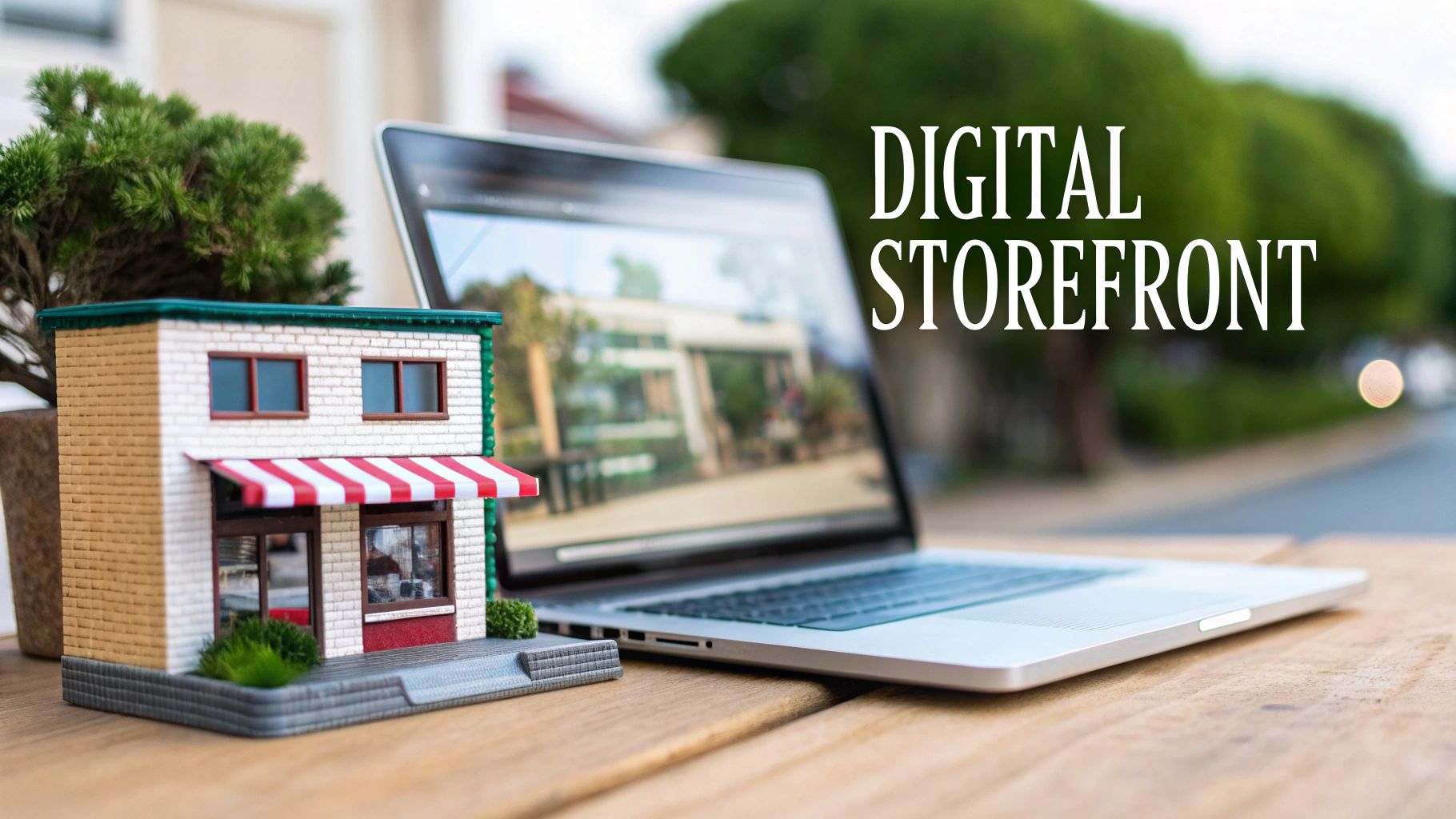
In a competitive market, your website is your single most important business asset. It works tirelessly around the clock to attract, engage, and convert potential customers. Without a professional online presence, it’s like having a shop with no front door or sign—you're basically invisible to people who are actively looking for what you offer.
A professionally designed website is engineered to build trust from the very first click. The data doesn't lie: around 75% of consumers judge a company's credibility based on its website design. A dated, confusing, or broken site can instantly destroy trust and send potential clients straight to your competitors.
Your Digital Front Door
Imagine a customer walking past two cafes. One is bright, clean, and welcoming, with clear signage and a modern feel. The other is dim and cluttered, with a hand-written sign taped to the window. Which one are they more likely to enter? Your website serves the exact same purpose in the online world.
An effective website provides a seamless user experience, guiding visitors effortlessly from their first impression to the final action you want them to take. This could be:
- Making a purchase online
- Filling out a contact form for a quote
- Booking an appointment
- Subscribing to your newsletter
This strategic guidance is what separates a simple online brochure from a powerful lead-generation machine.
Bridging the Digital Gap in Australia
Despite the clear benefits, there's a surprising digital divide among Australian businesses. Recent data shows that as of 2025, only 41% of Australian SMBs have a dedicated website, even though 75% of consumers prefer buying from businesses that are online.
The main hurdles holding businesses back are cost concerns (34%), a perceived lack of need (28%), and limited technical skills (22%). This gap highlights a massive opportunity for growth for those willing to invest in their online presence.
A great website is a foundational piece of your business infrastructure. It doesn’t just support your brand; it actively builds it, validates your legitimacy, and drives real, measurable growth.
To truly get the most out of your professional website, it needs to work hand-in-hand with your other marketing efforts. You can read more about essential digital marketing tips for small businesses to see how it all fits together and maximise your online impact.
What Actually Comes in a Web Design Package
When you invest in web design services for a small business, you’re buying a lot more than just a pretty home page. You're commissioning a powerful business tool. But let's be honest, the proposals can be packed with jargon like 'UI/UX', 'responsive design', and 'SEO foundations' that can make your head spin.
So, let's break down what these core components actually mean for your business, in plain English. Understanding these elements will help you have confident conversations with any agency and make sure you get exactly what your business needs. Think of it like learning the key features of a car before you buy it—you need to know what's under the bonnet.
The Blueprint and The Experience: UI and UX Design
These two terms are thrown around together all the time, but they cover two very different—and equally critical—parts of what makes a website successful. Getting your head around the difference is key to understanding what a professional design package really delivers.
-
User Interface (UI) Design is all about the look and feel of your website. It’s the visual blueprint—the colours, the fonts, the style of the buttons, and the overall layout of each page. A good UI is like the interior design of a great retail shop; it needs to be visually appealing, perfectly aligned with your brand, and give off a professional vibe.
-
User Experience (UX) Design is about how easy and enjoyable the website is to use. It’s the customer’s journey through your digital shop. Can they find what they need in a couple of clicks? Is the checkout process a breeze? UX is all about making the path from landing on your site to becoming a customer as smooth and intuitive as possible.
A site can have a beautiful UI but a terrible UX. Imagine a stunningly designed store where all the products are hidden in unmarked boxes—that's great UI, but awful UX. Professional web design services focus on mastering both, ensuring your site not only looks credible but also works flawlessly to guide users toward your goals.
Ensuring a Perfect Fit on Every Screen
Have you ever tried to browse a website on your phone, only to find yourself endlessly pinching and zooming just to read the text? That frustrating experience is the result of a non-responsive design. In today's world, where over 60% of web traffic now comes from mobile devices, a site that isn't mobile-friendly is a business-killer.
Responsive design is a non-negotiable part of any modern web design package. It means your website automatically adjusts its layout, images, and text to give every visitor the best possible experience, whether they’re on a huge desktop monitor or a small smartphone.
This isn't just about making things look good; it's about conversions and search rankings. Google actively prioritises mobile-friendly websites, which means a non-responsive site will struggle to even get found. A professional build guarantees a seamless experience for every single visitor, no matter how they find you.
Design vs. Development: The Looks and The Engine
Another crucial distinction to understand is the difference between design and development. While they work hand-in-hand, they are two separate phases of building a website.
-
Design is the creative and strategic phase. This is where the visual mockups, wireframes (the basic structural layouts), and prototypes are created. It’s where the UI and UX are meticulously planned out before a single line of code is ever written.
-
Development is the technical construction phase. This is where the designer’s plans are brought to life as a functional, live website. Developers are the ones who write the code that makes the buttons work, connects to databases, and ensures everything runs smoothly.
Think of it this way: a designer is the architect who drafts the beautiful and functional blueprints for a house. The developer is the builder who takes those plans and constructs the actual house, from pouring the foundation to wiring the electrics. A proper web package includes both of these specialised skills. You can explore some of our completed website design and development projects to see how these two phases come together.
Setting You Up for Success: Foundational SEO
Finally, a quality web design package should always include foundational SEO. Now, this isn't a full-blown marketing campaign, but it is the essential groundwork needed to make your site visible to search engines like Google from day one.
This typically includes things like:
- Optimising page titles and meta descriptions so they accurately describe your content in search results.
- Using proper heading structures (H1, H2, etc.) to help Google understand the hierarchy of your information.
- Ensuring fast page load speeds, which is a massive ranking factor.
- Creating a logical site structure and an XML sitemap so search engines can easily crawl and index all your pages.
Building a website without foundational SEO is like opening a shop on a street with no name. A good web design service makes sure you're on the map and ready to be found.
Understanding Web Design Costs in Australia
One of the first, most practical questions every small business owner asks is a simple one: how much does a new website actually cost? The honest answer is that there’s no single price tag. Asking for the cost of web design services for small business clients is a bit like asking for the price of a car—a reliable ute has a very different purpose and price point than a high-end European sports car.
Your website’s final cost is a direct reflection of what you need it to do. It comes down to its complexity, the features it needs, and the level of custom work required to hit your business goals. A clean, straightforward website for a local tradie will naturally sit at a different budget to a sophisticated e-commerce store for a fast-growing retail brand.
What Drives the Final Price Tag?
A few key factors have the biggest impact on the total investment for a professional website. Getting your head around these variables will help you make sense of quotes and see exactly where the value is coming from.
- Number of Pages: A classic five-page site (Home, About, Services, Blog, Contact) will cost less than a twenty-page site with detailed service breakdowns and in-depth project galleries.
- Custom Design vs. Template: Building a unique website from scratch requires a lot more design and development time than customising a high-quality pre-made template. The from-scratch approach offers total creative freedom, but that comes with a higher cost.
- E-commerce Functionality: This is a big one. Adding an online store with product pages, secure payment systems, and inventory management significantly increases the complexity and, therefore, the budget.
- Special Features: Need a custom quote calculator, an online booking system, or a private members-only area? These unique, interactive elements require specialised development and add to the overall cost.
Basically, any feature that makes life easier for your customers or automates a process for your business adds to the development timeline and the final price.
The infographic below breaks down the core pieces that come together to build a professional website—from its look and feel to the engine that runs it and, crucially, its ability to be found on Google.
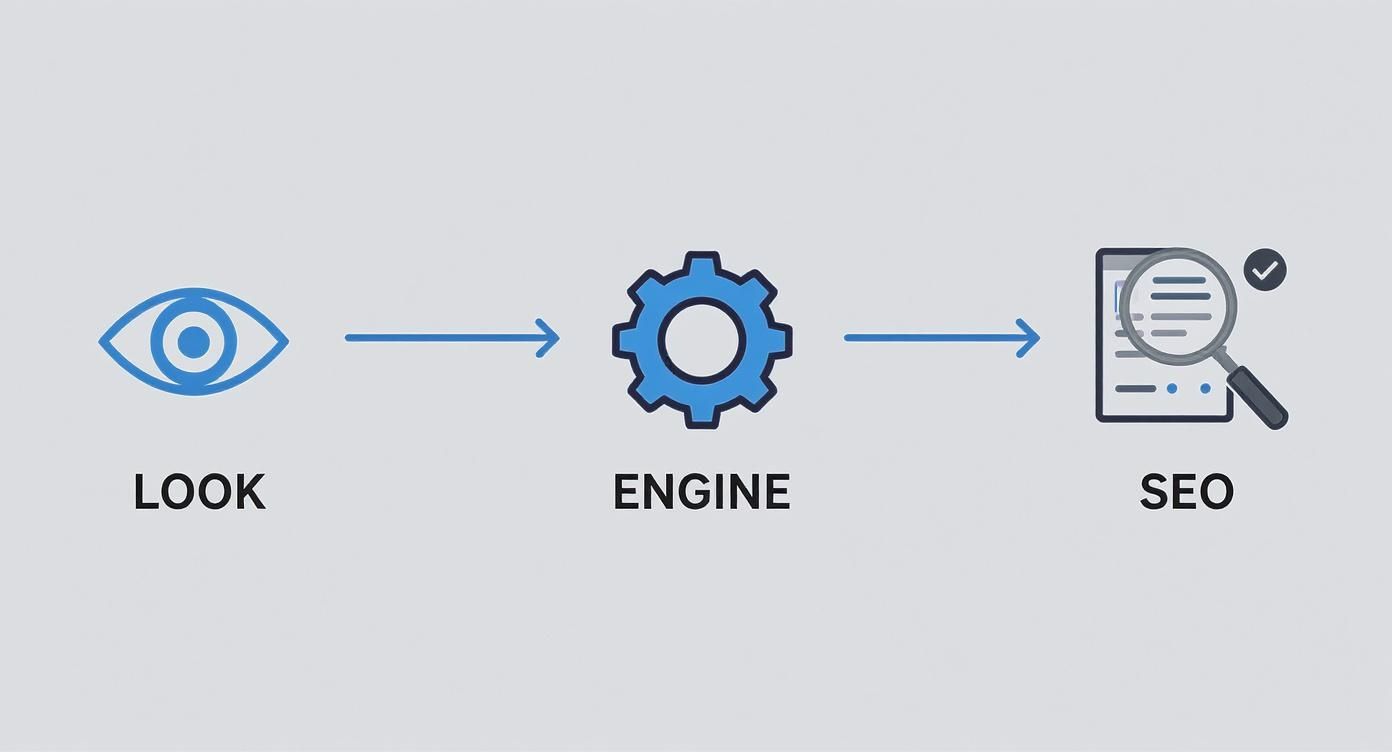
As you can see, a great website is a blend of visual design, solid technology, and search engine readiness. They’re all distinct parts of the same puzzle.
Typical Cost Brackets in Australia
To give you a clearer picture, it’s helpful to look at some typical investment ranges for Australian small and medium businesses. Most projects land somewhere between AUD $3,000 and $20,000, with the final figure heavily influenced by the industry and the specific functionality required.
For instance, e-commerce sites often start from $6,000 and can go up to $20,000 or more, simply because of their built-in complexity. On the other hand, a local café needing a sharp-looking site with online ordering might invest between $3,000 and $8,000.
To help you budget, here’s a look at some common project costs for different types of small businesses.
Typical Web Design Costs for Australian Small Businesses by Industry
This table provides estimated cost ranges for new website projects across different small business sectors in Australia, highlighting how features impact pricing.
| Business Type | Typical Functionality | Estimated Cost Range (AUD) |
|---|---|---|
| Local Tradie (e.g., Plumber) | Service pages, contact forms, photo gallery, mobile-first design | $3,000 – $7,000 |
| Café or Restaurant | Menu display, online booking integration, gallery, events calendar | $3,500 – $8,500 |
| Professional Service (e.g., Accountant) | Service descriptions, lead capture forms, blog, client testimonials | $4,000 – $12,000 |
| Small E-commerce Store | Product catalogue, secure payments, shipping integration, basic inventory | $6,000 – $20,000 |
| Health Clinic (e.g., Physio) | Service details, online appointment booking, practitioner profiles | $5,000 – $15,000 |
These figures are a guide, but they show how the required features directly shape the investment.
Your website is not just an expense; it is a strategic investment in your brand’s future. The right investment pays for itself through increased leads, higher sales, and enhanced brand credibility.
When you view the cost through this lens, it stops being a one-off outlay and becomes a long-term asset that generates real, measurable returns for your business.
The Hidden Costs to Consider
Beyond the initial design and build quote, there are a few ongoing costs that are essential for the health and performance of your website. Think of these as the running costs that keep your digital shopfront secure, fast, and open for business.
- Domain Name: This is your website's address on the internet (like yourbusiness.com.au). It's a small annual fee that’s usually very affordable.
- Website Hosting: This is the service that stores all your website's files and makes them available online. Good quality hosting is absolutely vital for speed and security. Our guide on choosing the right WordPress hosting can help you figure out what to look for.
- Ongoing Maintenance: Just like a car, a website needs regular tune-ups to keep it running smoothly. A maintenance plan typically covers software updates, security scans, and regular backups to catch problems before they start.
Factoring these elements into your budget from the get-go means no nasty surprises down the track, and it ensures your initial investment stays protected and effective for years to come.
How Great Design Actually Makes You Money
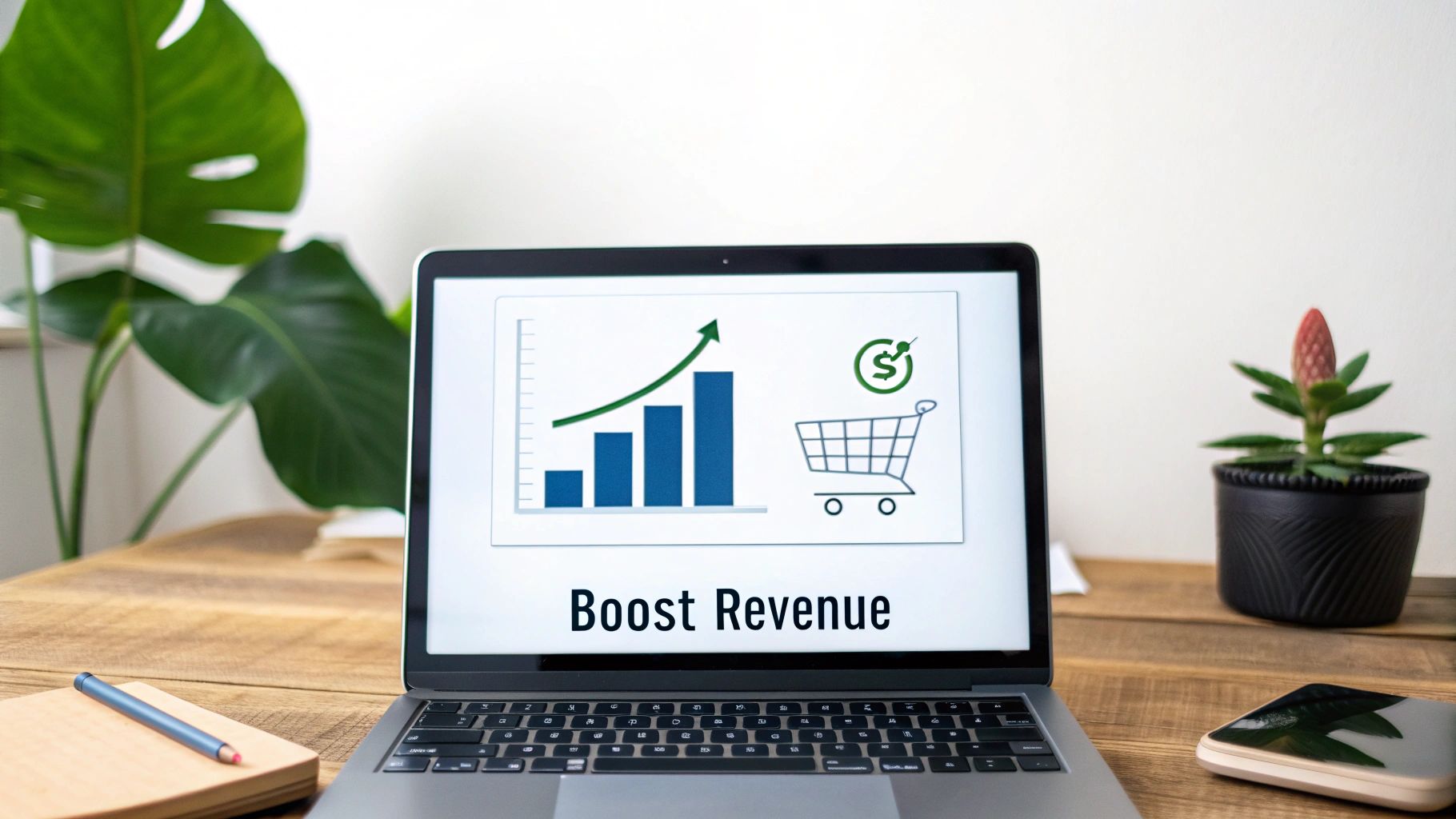
Let’s be honest, a website that looks good is nice, but one that makes you money is essential. The whole point of professional web design services for small business clients is to turn your online space into an engine for growth. It’s all about connecting smart design choices directly to your bottom line.
This isn’t fluffy art theory; it's commercial reality. A strategically designed website delivers a real return on your investment by guiding what users do on your site and improving the numbers that actually drive sales.
Building Instant Credibility and Trust
Online, first impressions are made in the blink of an eye. The moment a potential customer lands on your website, they’re making a snap judgement about whether your business is professional and trustworthy.
A clean, modern, and easy-to-use design sends a powerful signal: you’re a credible, serious business. On the flip side, a dated or confusing site creates immediate doubt, sending visitors clicking away before they even see what you offer. This is where professional design earns its keep—by building trust from the very first second.
A great website doesn't just present your business; it validates it. Strategic design is the fastest way to build the trust needed to turn a curious visitor into a confident buyer.
Thoughtful design does this by making information simple to find, showing off your services clearly, and giving every user a smooth, frustration-free experience.
Lowering Bounce Rates and Keeping People Hooked
Your bounce rate is just a fancy term for the percentage of people who land on your site and leave without clicking on anything else. A high bounce rate is a massive red flag. It’s the digital version of someone walking into your shop, taking one look around, and walking straight back out.
Effective web design tackles this head-on. By creating a logical and engaging journey, it gives people a reason to stick around, explore other pages, and learn more about what you do. This is done through a few key things:
- Clear Navigation: An intuitive menu that helps people find what they’re looking for without having to think too hard.
- Compelling Visuals: High-quality images and a clean layout that pull the user in and make your content easy to digest.
- Fast Load Times: A technically solid site that loads quickly, because nobody has the patience to wait for a slow page.
Every extra second a user stays on your site is another chance to guide them towards becoming a customer.
Mastering the Art of Conversion
At the end of the day, your website’s job is to get visitors to take a specific action. That action—or "conversion"—is what brings in the money, whether it’s making a purchase, filling out a contact form, or signing up for a free trial.
Smart design uses a mix of psychology and visual cues to gently nudge users towards that goal. The data is pretty clear on this: well-planned websites can boost conversion rates by up to 200%. Even small tweaks, like using high-contrast red call-to-action buttons, have been shown to improve conversions by 34% because they grab the user’s eye and tell them what to do next. You can see more compelling stats on how design influences users in these insightful website design statistics.
By making it obvious and easy for people to take the next step, professional design turns your website from a passive online brochure into an active sales tool. This process works even better when paired with a strong SEO foundation. You can learn more about how professional SEO services on the Sunshine Coast can boost your site's ability to attract and convert the right customers. Investing in your website's design is one of the most powerful moves you can make for business growth.
Choosing the Right Web Design Partner
Picking the right partner to build your website is one of the biggest decisions you'll make for your business. It’s not just about finding someone with technical chops; you need a team that genuinely gets your vision and what you're trying to achieve commercially. It can feel like a massive task, but if you know what to look for, you can find a partner who becomes a genuine asset.
Think of it like hiring a builder for a physical shop. You wouldn’t just go with the cheapest quote. You'd want to see their previous projects, chat with past clients, and feel confident they understand the floor plan. The same logic applies when choosing who builds your digital storefront.
Evaluating Portfolios and Past Work
First things first, dive into their portfolio. This is their resume, showing off their style, skills, and the kinds of businesses they usually work with. But don’t just scroll through the pretty pictures—you need to dig a little deeper.
Actually click through to the websites they’ve built. Do they load quickly? Are they a breeze to navigate on your computer and your phone? This hands-on experience gives you a much better feel for their quality than a static screenshot ever could.
Look for variety and relevance. A strong portfolio shows they can adapt their style to different brands. Most importantly, see if they have experience with businesses like yours. An agency that only builds sleek e-commerce sites for fashion labels might not be the best fit for a local plumbing business.
Reading Between the Lines of Testimonials
Testimonials and case studies are your next stop. While glowing reviews are great, you're looking for specifics. A generic "they did a great job" doesn't tell you much. What you want to see is something like, "after the new site launched, our online bookings increased by 40% in the first three months."
That kind of results-driven feedback is a massive clue that the agency is focused on outcomes, not just aesthetics. It proves they get that a successful website is one that actually achieves a business goal.
A web design partner should be just that—a partner. They should be as invested in your business's success as you are, offering strategic advice and focusing on solutions that drive real growth, not just delivering a website.
Look for case studies that walk you through the problem, the solution, and the measurable results. This shows they have a strategic process and are committed to delivering a real return on your investment.
Understanding Their Process Is Crucial
Every agency works differently, and getting a handle on their process is key to a smooth project. A professional, organised partner will have a clear, step-by-step process they can walk you through before you even think about signing a contract.
A transparent process is a sign of a well-run agency. It should cover key stages like:
- Discovery and Strategy: Where they dig in to understand your business, your goals, and your customers.
- Design Mockups: The creative phase where you see the visual direction before a single line of code is written.
- Development and Feedback: The actual build, with clear points for you to review their work and ask for changes.
- Launch and Training: The final handover, which should always include showing you the ropes so you can manage your new site.
An agency that can't clearly explain its process is a potential red flag. It hints at a lack of structure that could lead to missed deadlines, poor communication, and a final product that doesn't hit the mark. Asking about their project management shows you're a serious client and helps you gauge their professionalism from day one. Choosing the right web design services for your small business is all about making sure this process fits with your needs.
To help you navigate your options, it's useful to compare the different types of providers you might encounter. Each has its own strengths and is suited to different business needs and budgets.
Comparing Web Design Options for Small Businesses
Making the right choice often comes down to balancing your budget, your goals, and how much time you can personally invest. This table breaks down the common providers to help you decide which path is the best fit for your business.
| Provider Type | Best For | Pros | Cons |
|---|---|---|---|
| DIY Website Builders | Solopreneurs or hobbyists on a tight budget with basic needs. | – Extremely low cost – Full creative control – Quick to get started |
– Very time-consuming – Limited customisation – Can look unprofessional – Poor for SEO |
| Freelance Web Designer | Small businesses needing a professional site without a huge agency budget. | – More affordable than an agency – Direct, one-on-one communication – Often flexible |
– Limited by one person's skills – Can be a risk if they disappear – May lack strategic insight |
| Small Web Design Agency | Businesses looking for a strategic partner for growth. | – Team of specialists (design, dev, SEO) – Strategic, results-focused approach – Reliable process |
– Higher investment than a freelancer – May have less flexibility on smaller projects |
| Large Digital Agency | Established companies with large budgets and complex digital needs. | – Full suite of marketing services – Extensive resources and experience – Can handle large scale |
– Very expensive – Often less personal – Slower-moving processes |
Ultimately, the goal is to find a provider who feels like a true partner. Whether you choose a freelancer or a small agency, the right fit will be someone who is as committed to helping you grow as you are.
Your Web Design Questions Answered
Stepping into the world of professional web design can feel a bit like learning a new language. You know exactly what you want your business to achieve, but a few practical questions can create a bit of uncertainty. This section is here to give you clear, straightforward answers to the most common queries we hear from small business owners, so you can move forward with confidence.
We’ll get right into the nuts and bolts—from timelines and budgets to content and getting seen on Google. Think of this as your go-to guide for the details that really matter.
How Long Does It Take to Build a Small Business Website?
This is usually the first question on everyone's mind. For a simple, professional website with around 5-10 pages, you should plan for a timeline of about four to six weeks. This gives us enough time to go through a proper, thorough process without cutting any corners.
Now, if you're looking for something more complex—say, a full e-commerce shop, a custom booking system, or a site with a huge amount of content—it’s naturally going to take longer. For these bigger builds, a timeline of eight to twelve weeks or more is a much more realistic expectation.
The whole project is broken down into clear stages:
- Discovery and Planning (1-2 weeks): This is where we properly get to know your business, your goals, and your customers.
- Design Mockups (1-2 weeks): Our designers will create the visual blueprint for your new site.
- Development and Coding (2-4 weeks): We bring the approved designs to life and build a fully functional website.
- Content and Revisions (1-2 weeks): We'll add your text and images, and then make final tweaks based on your feedback.
It's worth remembering that the biggest factor that can stretch a timeline is waiting on feedback or content (like text and images) from the client. Great communication is what keeps the wheels turning and everything on schedule.
What Are the Ongoing Costs After My Website Is Launched?
Getting your website live is a huge milestone, but it's not the final step. To keep your digital shopfront running smoothly and securely, there are a few essential ongoing costs to budget for. These aren't hidden surprises; they're just the standard running costs for any professional website.
The main recurring expenses are your domain name (your website address), which is usually a small annual fee of around $20-$30, and your website hosting. Good quality hosting, which is what keeps your site fast and online, can range anywhere from $15 to over $50 per month for a reliable plan.
Think of ongoing maintenance like servicing your car. Regular tune-ups are essential to prevent breakdowns, keep things running smoothly, and protect your initial investment.
On top of that, many businesses opt for a website maintenance plan. These plans, often costing between $100 and $500+ per month, are a smart investment in your site's health. They usually cover critical tasks like software updates, security scans, performance checks, and regular backups—all vital for protecting your site from hackers and making sure it performs at its best.
Do I Need to Provide My Own Content and Images?
That's a fantastic question, and the short answer is: it depends on your agreement with us. Generally, yes, the business owner provides the core content. After all, nobody knows your business, your services, and your customers better than you do.
We’ll usually expect you to supply the written text (the "copy") for key pages like 'About Us', 'Services', and product descriptions. But if writing isn't your strong suit, don't stress. We can bring in a professional copywriter as an add-on service. It can be a brilliant investment to make sure your message is compelling and properly optimised for search engines.
When it comes to images, you've got options. If you have your own high-quality photos of your team, products, or location, that's perfect. If not, we can help you source professional stock photos that fit your brand perfectly. The most important thing is to be clear on who is responsible for what right at the start to avoid any hold-ups down the track.
Will My New Website Be Optimised for Google Search?
Absolutely. Any reputable web design service for a small business should include foundational search engine optimisation (SEO) as a standard part of the build. This means your site will be built from the ground up to be friendly to search engines like Google, giving you a solid platform to be found online.
This initial on-page SEO covers several key technical elements:
- Using proper heading tags (H1, H2, etc.) to give your content a logical structure.
- Creating clean, SEO-friendly URLs that are easy for people and search engines to read.
- Writing unique meta titles and descriptions for each page to improve how you look in search results.
- Optimising your image sizes for faster loading and adding descriptive alt text.
- Ensuring the site is fully mobile-friendly and loads quickly, as these are massive ranking factors.
This setup provides a strong launchpad for your business online. However, it's crucial to understand that this is different from an ongoing SEO campaign, which involves continuous work like creating content, building links, and local SEO to actively climb the rankings over time. Always ask what level of SEO is included in any web design package.
Ready to build a website that not only looks incredible but also delivers real, measurable results? The team at Digital Roo's combines strategic thinking with creative design to help Australian businesses thrive online. Let's build something great together.