

Before you even think about searching for a website design agency in Melbourne, you need to do some groundwork first. And honestly? This is the most important part of the entire process. A new website isn't just about getting a slick, modern design; it’s a business tool that needs to deliver real, measurable results.
Defining Your Project Before You Search
Walking into meetings with agencies without a clear vision is like asking a builder to construct a house with no blueprints. It's a recipe for confusion, wasted time, and quotes that are all over the place. To get this right, you need to turn that vague idea of a "new website" into a solid project brief. That clarity empowers you to steer the conversation from the very first call.
Start with your number one business goal. Is it to boost online sales for your Melbourne cafe by 30%? Maybe your B2B firm needs to generate more qualified leads through a simple contact form. Pinning down a clear, measurable objective is what guides every single design choice and feature down the line.
Setting a Realistic Budget
Let's talk money. This is often the trickiest conversation, but it's essential to have it upfront. A huge mistake businesses make is only budgeting for the initial design and build. That's just the tip of the iceberg. A realistic budget has to account for the ongoing costs of keeping your site healthy and effective.
When you're planning your investment, think beyond the launch. You'll need to factor in:
- Initial Design and Development: This is the core cost of getting the website created.
- Ongoing Maintenance: Think security updates, backups, and tech support. It's non-negotiable.
- Hosting and Domain Fees: These are the annual costs to keep your site live on the internet.
- Content and SEO: Will you need a professional to write your copy or ongoing work to get you found on Google?
Getting this planning phase right is critical. If you want to go deeper, there’s a comprehensive guide to web development project planning that really lays out the groundwork for a successful partnership with an agency.
A well-defined project brief doesn't just help you get accurate quotes. It makes sure the final website is perfectly aligned with your business goals, turning it from an expense into a strategic investment.
This prep work is absolutely vital, especially in a competitive market where businesses are spending big on quality design to drive sales. Australia's web design services market is now valued at a whopping $1.4 billion, partly because over 66% of people flat-out prefer to browse a beautifully designed website. This groundwork ensures you pick an agency that can deliver a powerful, growth-focused digital presence. If you're curious about what that looks like in practice, you can explore our approach to https://digitalroos.com/websites/.
An agency’s portfolio is your best window into what they can actually do, but it’s so easy to get distracted by flashy designs. Let's be honest, a pretty website that doesn't bring in leads or sales is just an expensive digital brochure.
To figure out if a website design agency in Melbourne is the real deal, you have to look past the surface-level polish and see their work for what it should be: a collection of business solutions.
When you start clicking through their past projects, pay close attention to the variety. Do all their websites for different industries look suspiciously similar? That could be a red flag. It might mean they’re just tweaking the same template over and over instead of building custom strategies. A top-tier agency will show a clear understanding of different target audiences and business goals in every project they feature.
Look for Strategic Functionality
Beyond the first impression, you need to dig into the user experience (UX) of each site. Put yourself in the customer's shoes. Is the navigation intuitive? Can you figure out what the business does and what you're supposed to do next within a few seconds?
A huge part of this is checking for conversion-focused design. Look for clear, compelling calls-to-action (CTAs). Does the design naturally guide you towards a specific goal, like filling out a form, making a purchase, or signing up? If you feel lost or confused, chances are their future customers will too.
The best portfolios don’t just show what the agency built; they tell the story of the problem they solved. Look for case studies that explain the client's original challenge and—most importantly—the measurable results the new website delivered.
Analyse the Technical Details
Finally, don't skip the technical basics. Mobile responsiveness is non-negotiable. Seriously, open their portfolio sites on your phone and tablet. Does the layout adapt seamlessly, or is it a clunky, frustrating mess? With over half of all web traffic now coming from mobile devices, this is absolutely critical. A slow or badly optimised mobile site will turn away a huge chunk of your potential customers.
The infographic below shows the core components that should be clear before any project kicks off. This is a great lens through which to assess if an agency's portfolio lines up with a strategic, goal-oriented approach.
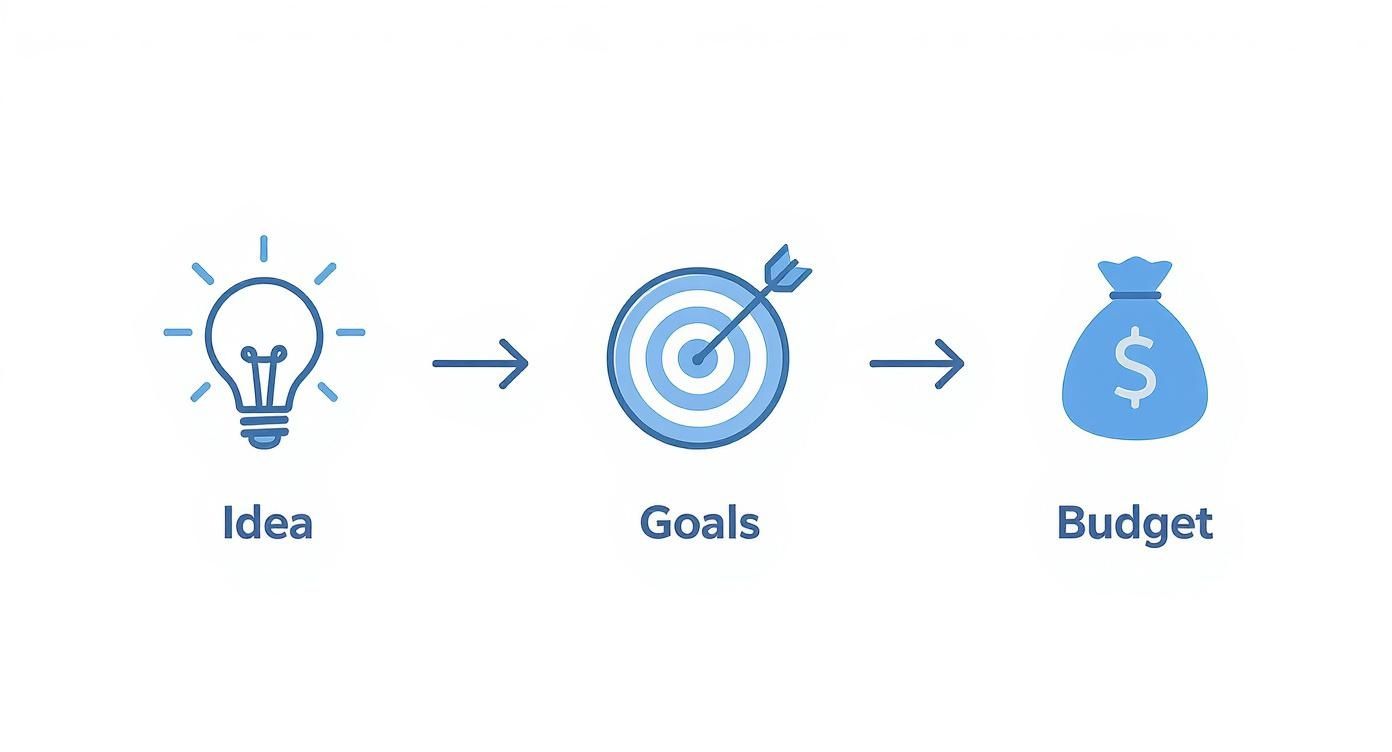
This flow—from idea to goals to budget—is the foundation a good agency uses. Evidence of this strategic thinking should be all over their portfolio. To see how these principles look in the real world, you can explore our work with various clients.
Here’s a quick checklist to help you systematically review each agency’s work.
Agency Portfolio Checklist
Use this checklist to systematically evaluate the portfolio of each Melbourne web design agency you consider.
| Evaluation Criteria | What to Look For |
|---|---|
| Industry Diversity | Do they showcase work across various sectors, or do all sites look the same? |
| Strategic Goals | Is it clear what business problem each website was designed to solve? |
| User Experience (UX) | Is navigation intuitive? Is the site easy and pleasant to use? |
| Conversion Focus | Are there clear calls-to-action (CTAs) guiding the user? |
| Mobile Responsiveness | Does the site work flawlessly on a smartphone and tablet? |
| Technical Performance | Does the site load quickly? Check a few examples. |
| Measurable Results | Do they provide case studies with actual data (e.g., increased leads, sales)? |
| Visual Design Quality | Is the design modern, professional, and appropriate for the brand? |
Keeping these points in mind will help you move beyond a simple "I like the look of it" and make a much smarter decision based on an agency's ability to deliver real business value.
Why a Local Melbourne Agency Gives You an Edge
In a world full of remote teams and global freelancers, the idea of hiring a local partner can feel a bit old-school. But when it comes to choosing a website design agency in Melbourne, going local gives you a serious home-ground advantage that a Zoom call just can’t replicate. A local agency doesn’t just work in your city; they live and breathe its unique commercial rhythm.
That shared context is gold. A Melbourne-based team just gets the local audience—their quirks, their preferences, and what makes them tick. This isn't just fluffy stuff; it translates directly into a website that speaks authentically to Melburnians, from the imagery and copy to the overall feel.
On top of that, a local agency has a gut-level understanding of the regional market. They know the competition inside and out, which is crucial for tapping into the key benefits of local SEO. They can build you a site that doesn’t just look sharp but is engineered to rank for the search terms your actual customers are using.
Access to a Local Creative Network
One of the most underrated perks of hiring local is tapping into their network. A great Melbourne agency has the city’s best creatives on speed dial. We’re talking about:
- Photographers who know how to capture the vibe of your business in its Melbourne setting.
- Copywriters who can nail the local tone without it sounding forced.
- Marketers who are experts in reaching people right here in the city.
This ready-made network means every part of your site is high-quality and genuinely speaks to the local market.
Choosing a local agency means you're not just hiring a design team; you're tapping into a rich ecosystem of local talent and market intelligence that can give your business a significant competitive advantage.
Melbourne is a powerhouse of digital creativity, home to over 4,900 web designers, with that number projected to grow by 12.9% in the near future. This vibrant talent pool means you have access to top-tier expertise right on your doorstep. This kind of local know-how is especially vital for getting your site seen, a core part of our own local SEO services.
A beautiful design is worthless if the project is a chaotic, frustrating mess.
The real magic in a partnership with a website design agency in Melbourne isn’t just their creative flair; it’s their process. It’s how they communicate. A structured, transparent workflow is the bedrock of a successful project, preventing those dreaded delays, budget blowouts, and endless headaches.
Before you even think about signing a contract, you need a crystal-clear picture of how they get from your vision to a live website. Any decent agency will have a well-defined journey that moves from discovery and strategy, through to design, development, and finally, launch. But the devil is always in the details of how they manage that journey with you.
Vetting Their Project Management Style
How an agency manages collaboration is a massive clue about the experience you’re in for. You’re not just another client on the books; you’re a partner. Your feedback is what shapes the final product, so their method for collecting and acting on it really matters.
Ask them straight up about their workflow. What tools do they use to keep you in the loop? Do they use project management software like Asana or Trello? Will you have one dedicated point of contact—a project manager who is your go-to for everything? Having a single person responsible for your project stops things from getting lost in translation between designers, developers, and you.
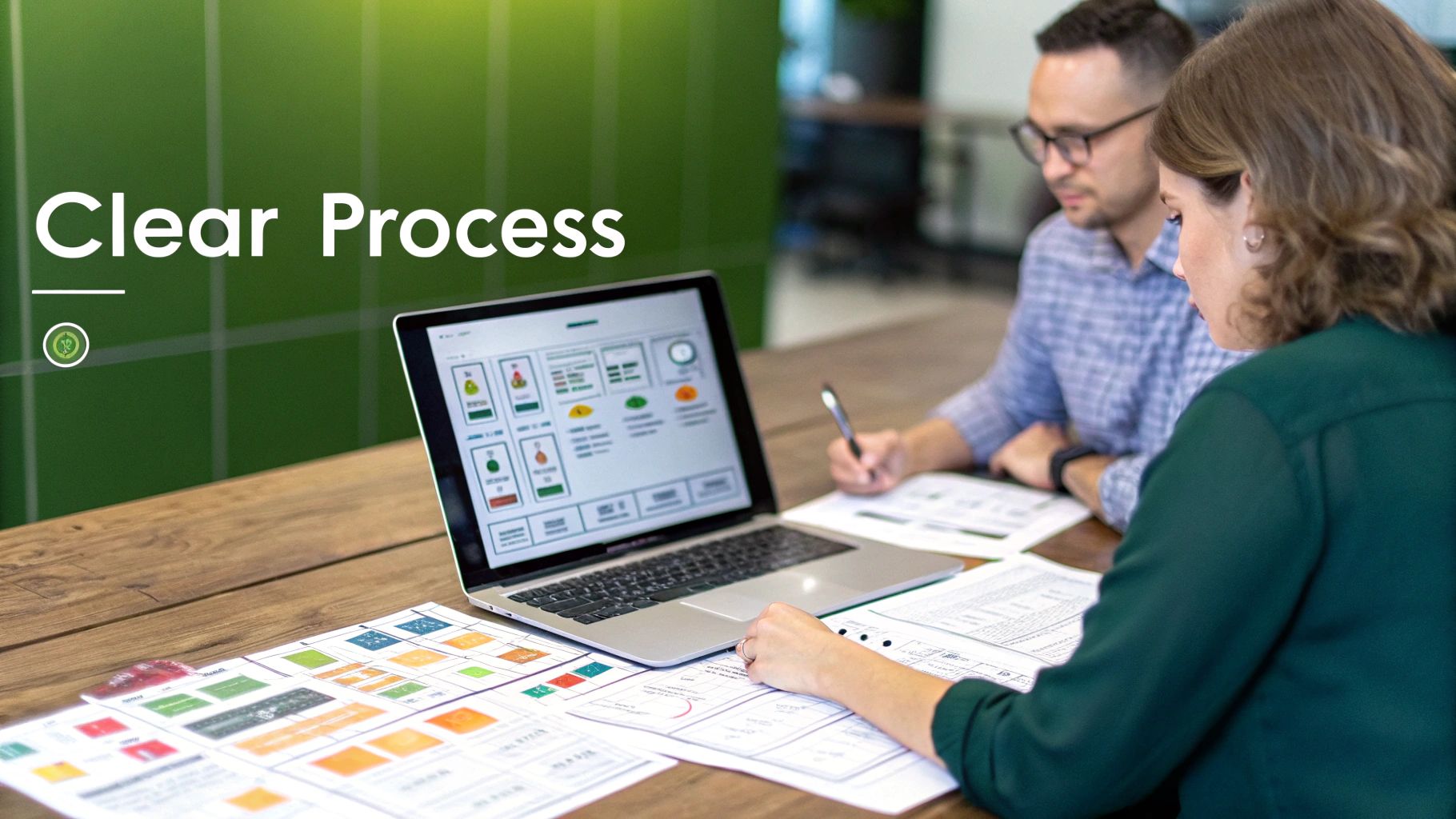
A great agency won't just build you a website; they'll guide you through a clear, collaborative process. If their communication plan feels vague or disorganised from the start, that’s a major red flag.
Finally, get specific about revisions. You need to know how many rounds of feedback are included in the proposal. What happens if you need more changes later on? Nailing down their revision process upfront prevents awkward conversations about extra costs down the track.
A great partner will have a fair and transparent system for handling feedback. This ensures the final website is exactly what you wanted, without any surprise bills. A clear process is the best insurance you can get for a smooth project.
Decoding Proposals and Spotting Hidden Costs
Once the proposals from your shortlisted agencies start landing in your inbox, the real work begins. A glossy PDF promising the world is one thing, but the true value is always buried in the details. Learning to read between the lines is the key to finding a genuine partner and dodging those nasty budget blowouts later on.
A quality proposal from a website design agency in Melbourne should be a project blueprint, not just a price tag. You need to see a crystal-clear scope of work, a list of tangible deliverables like wireframes and mockups, a realistic timeline with key milestones, and a completely transparent, itemised cost breakdown. Anything less isn't good enough.
What's Not on the Page?
Pay just as much attention to what a proposal doesn't say. It’s a classic move for some agencies to leave certain services out to make their initial quote seem lower and more attractive. These are the hidden costs that can completely derail your project.
Be on the lookout for explicit mentions of these items:
- Content Creation: Does the quote actually include a professional copywriter to write the words for your pages?
- SEO Foundations: Will they handle the basic but critical SEO setup, like title tags, meta descriptions, and submitting a sitemap to Google?
- Photography and Imagery: Is a budget for stock photos included, or even better, a professional photoshoot?
- Post-Launch Support: What happens after the site goes live? Is there any training or a maintenance plan included in the price?
If these aren't clearly listed as inclusions, you have to assume they're extras you'll be paying for later.
Spotting the Red Flags
Vague language is your biggest enemy in a proposal. Phrases like "ongoing support" or "design revisions" are totally meaningless without specifics. How many hours of support is that? How many rounds of revisions do you get before you start paying more? Ambiguity is a breeding ground for disputes down the line.
A transparent proposal is the hallmark of a trustworthy agency. If a quote feels confusing or deliberately vague, that's a massive warning sign to either proceed with extreme caution or just walk away.
An unusually cheap quote should also set off alarm bells. Everyone loves a good deal, but a price that seems too good to be true probably is. It can signal that an agency is cutting corners, relying on generic templates, or planning to aggressively upsell you on "essential" extras once you're locked in. Your goal isn't to find the cheapest option; it's to find the best value. A detailed proposal gives you the clarity you need to tell the difference.
The Crucial Questions to Ask Before You Sign Anything
Alright, you've done the hard yards. You’ve shortlisted a few agencies, poked around their portfolios, and you've got a good gut feeling about their process. Now for the bit that many businesses gloss over—the practical, nuts-and-bolts questions that prevent nasty surprises down the track.
Getting straight answers here is what separates a smooth project from a future headache. These aren't just tech questions; they’re about your ownership, the real-world timeline, and what happens to your investment once it's live.
Who Actually Owns the Website?
This one is a deal-breaker. You'd assume that if you're footing the bill, the website is 100% yours. Shockingly, that's not always how it works. Some agencies build sites on their own closed-off, proprietary platforms, which means you're basically just leasing it from them.
You need to be direct. Ask them, point-blank: "Once the final invoice is paid, will I have complete ownership of everything—all the design files, the code, the content, everything?"
The only acceptable answer is a crystal-clear "yes," and it needs to be written into your contract. Without full ownership, you're handcuffed to that agency. You can't move your site to a new host, and you can't get another developer to work on it. You're stuck.
Owning your website is like having the title to your car. Without it, you’re just renting. Make sure your contract guarantees a full handover of all assets the moment the project is complete.
What’s the Real-World Timeline?
Every business wants their new site up and running yesterday, but a rushed job is a recipe for disaster. Ask the agency to walk you through a detailed project timeline with clear, defined milestones. A standard website project here in Melbourne often takes between 8 to 12 weeks, but that can change dramatically depending on the complexity.
A professional timeline should map out key stages like:
- Initial discovery and strategy workshops
- Wireframing and user experience (UX) mapping
- Visual design mockups and feedback rounds
- The actual development and coding phase
- Loading in all your content
- Testing, bug squashing, and quality assurance
- The final launch and handover
Seeing this laid out gives you a clear picture of the journey ahead and shows you exactly when they'll need your input to keep things moving.
What Happens After We Launch?
Hitting the "go live" button is the starting line, not the finish. Your website is a living asset that needs regular care to stay secure, fast, and doing its job. This is where unexpected costs can ambush businesses that haven't planned ahead.
Put it to them straight: "What does your post-launch support look like?"
A good agency will have clear maintenance packages that cover the essentials—things like software updates, security monitoring, and regular backups. You should also clarify if training on how to manage your new site is included in the project cost or if that's extra. Understanding their ongoing support from the get-go ensures your investment is protected for the long haul.
Ready to build a website that delivers real results without the guesswork? The team at Digital Roo's offers a completely transparent process, from the initial brief to post-launch support, ensuring you get a powerful digital asset you truly own. Let's discuss your project today. Find out more at https://digitalroos.com.