

Before you even think about searching for a website development company in Melbourne, the most important work needs to happen right at your own desk. It’s all about creating a clear, detailed blueprint for your project. This upfront thinking ensures you can walk into meetings, communicate your vision clearly, and find a partner who genuinely gets what you’re trying to achieve.
Defining Your Website Vision Before You Search
Jumping into agency calls without a plan is like trying to build a house without architectural drawings. You’ve got to map out what success looks like before you can ask someone else to build it for you.
Start with your core business objectives. Is this website’s main job to generate leads? Sell products directly? Or is it purely an information hub? The answer shapes the entire project. An e-commerce site needs rock-solid product pages and a secure checkout, while a B2B services site is all about clear calls-to-action and detailed service descriptions.
Getting this clarity helps you separate the absolute ‘must-haves’ from the ‘nice-to-haves’, which is critical for keeping your project’s scope and budget in check. For a deeper dive into what agencies can offer, check out our guide on building powerful websites.
Know Your Audience and Functionality
Who are you actually building this for? Take a moment to sketch out some simple user personas that represent your ideal customers. Think about their tech-savviness, the problems they’re trying to solve, and the information they’re hunting for. This audience-first approach should guide every single design and functionality decision you make.
With your audience in mind, you can start listing the specific functions your website needs to perform. For example:
- User registration and profiles for a community-based platform.
- An integrated booking system for a local service business.
- A dynamic portfolio gallery for a creative agency.
- A blog or resources section to power your content marketing.
Having a detailed functional brief doesn’t just refine your search; it empowers you to have far more productive conversations with potential agencies, saving everyone time and money down the track.
Creating Your Project Brief
To make sure you’ve covered all your bases, it’s a good idea to create a simple checklist. This will become the foundation of your project brief, giving any potential web development partner a crystal-clear understanding of what you need right from the first conversation.
Below is a simple checklist to get you started. Answering these questions will put you in a much stronger position to evaluate proposals later on.
Essential Project Scoping Checklist
| Requirement Area | Key Questions to Answer |
|---|---|
| Business Goals | What is the #1 objective of this website (e.g., lead generation, sales, branding)? How will we measure success? |
| Target Audience | Who are our primary and secondary users? What problems are they trying to solve on our site? |
| Core Functionality | What are the absolute must-have features (e.g., e-commerce cart, booking form, user login)? What are the nice-to-haves? |
| Content | Who is responsible for creating and migrating content? Do we need a blog, resource library, or case studies section? |
| Design & Branding | Do we have existing brand guidelines? Are there any competitor or inspirational websites we like (and why)? |
| Technical Needs | Do we need any integrations with third-party software (e.g., CRM, email marketing)? Are there specific security or hosting needs? |
| Budget & Timeline | What is our realistic budget range for this project? Do we have a firm launch deadline or key milestones to hit? |
Once you have solid answers to these questions, you’ll be ready to start engaging with Melbourne’s top web development agencies with confidence.
Navigating Melbourne’s Competitive Market
Before you dive in, it helps to get the lay of the land. Melbourne’s digital industry is incredibly active and competitive—and for good reason. As of 2025, there are over 570 web development companies operating in Melbourne alone, making it a major hub for digital services in Australia.
This density is great news for you, as it highlights the strong demand and the wealth of options available. To get a better handle on the different types of partners out there, it’s worth spending some time understanding what a web development agency does and the value they can bring to your project.
How to Evaluate Portfolios and Past Projects

An agency’s portfolio is your window into what they can actually do. It’s more than just a gallery of pretty designs; it’s a living track record of problems they’ve solved and results they’ve delivered. When you’re vetting a website development company in Melbourne, you need to look past the slick visuals and really dig into their work with your own goals front of mind.
Start by filtering for relevance. Does their portfolio have examples from your industry, whether that’s professional services, e-commerce, or hospitality? A team that already gets the nuances of your market has a serious head start on understanding your specific business challenges and what your customers expect.
Look for Functional Complexity
Next, you need to gauge the technical depth of their past projects. If your site needs more than a simple contact form, you have to find a partner who has been there and done that. For instance, if you’re building an e-commerce platform, you should be looking for examples where they’ve successfully built:
- Custom checkout flows with specific payment gateways.
- Advanced product filtering and search functions.
- Complex integrations with inventory management or CRM systems.
In the same way, if you need a secure member portal, hunt through their portfolio for projects with user authentication, data protection, and personalised dashboards. This is what proves they can handle more than a basic brochure site. To get a feel for how different projects can be presented, you can explore our own portfolio of past work for a few examples.
Analyse Case Studies for Results
The best portfolios don’t just show you the “what”—they show you the “why” and “how.” A great case study tells a story, outlining the client’s initial problem, the agency’s strategic solution, and, most importantly, the tangible outcomes.
Look for metrics and results. Did the new website increase conversions by 25%? Did it slash the bounce rate or boost user engagement? A focus on real business outcomes is what separates a design shop from a true development partner.
This deeper level of analysis helps you find a company that doesn’t just build functional websites, but creates digital assets that genuinely drive business growth.
Reading Between the Lines of Client Reviews
Homepage testimonials are nice, but they’re the highlight reel. The real story about a web design agency lives on third-party platforms, where the feedback is raw, honest, and completely unfiltered. If you want to know what it’s really like to work with someone, you have to dig a little deeper.
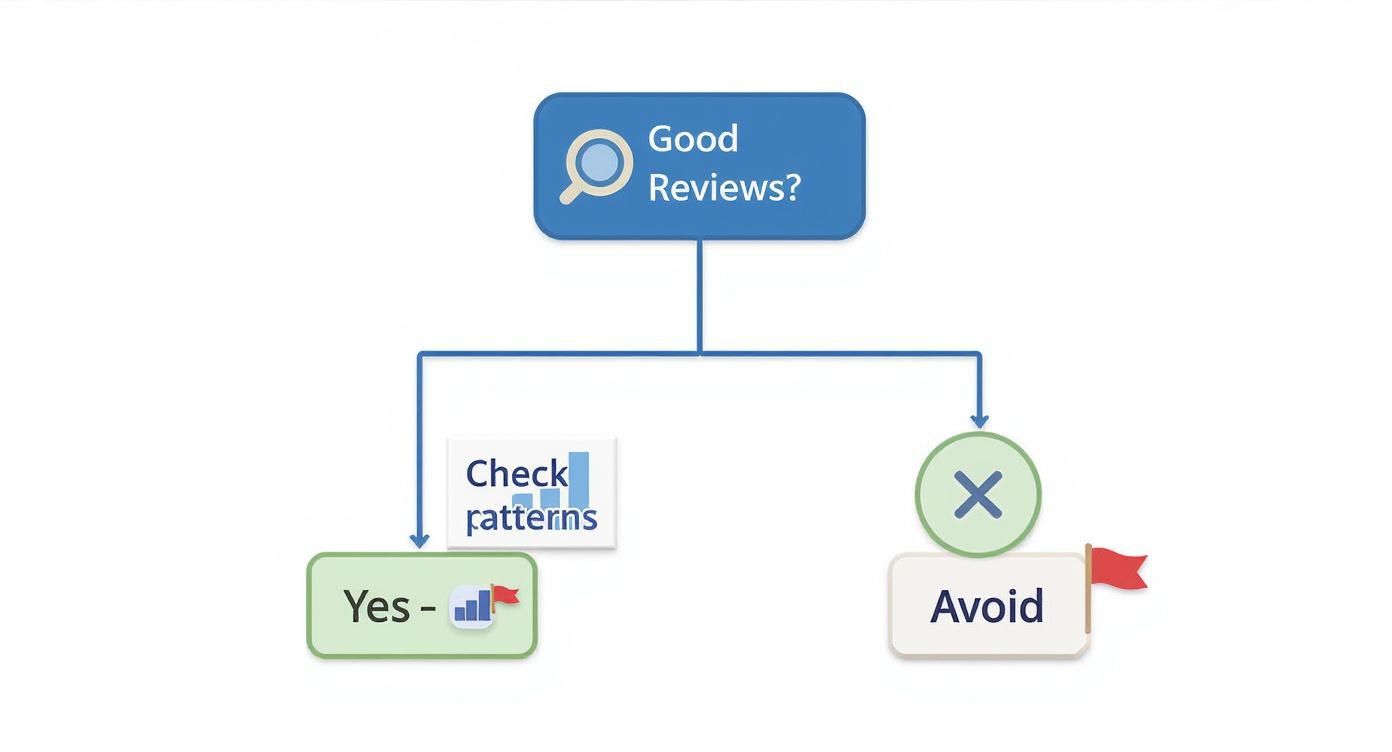
Don’t just glance at the star rating. Get in there and read the actual comments. Look for patterns. Are clients consistently raving about clear communication and hitting deadlines? Or do you see a few too many grumbles about surprise costs and radio silence after launch? One bad review is just an outlier; three mentioning the same issue is a red flag you can’t ignore.
This is how you find a website development company in Melbourne that doesn’t just build a pretty site, but is a genuinely good partner for the long haul.
Uncovering the Full Story
The best clues about an agency’s character are often hidden in the details of their reviews. You’re looking for more than just “they did a great job.”
- Problem-Solving: How did they handle a crisis? A review that mentions how the team navigated an unexpected technical glitch and still delivered is worth its weight in gold. That shows resilience.
- Post-Launch Support: Look for reviews from clients a year or more down the track. Are they still happy? Great partners don’t disappear the second the final invoice is paid.
- Communication Style: Words like “collaborative,” “responsive,” and “a pleasure to work with” are huge green flags. They tell you the process itself will be smooth, not a constant battle.
The most telling feedback isn’t just about the final website; it’s about the journey. A review that details a smooth, communicative process is often more valuable than one that only praises the design.
Client satisfaction is everything in this game. In fact, data from industry platforms shows that around 90% of Melbourne-based web development firms hold a rating of 4.5 stars or higher in 2025. That’s a high bar.
It means you don’t have to settle. You can be selective and find a team that truly stands out from the pack. Platforms like DesignRush offer a great starting point to explore agency ratings and reviews and see who’s consistently hitting the mark.
Comparing Agency Proposals to Find Real Value
Okay, the proposals from your shortlisted agencies have landed in your inbox. It’s tempting to jump straight to the price at the bottom, but I can tell you from experience that the cheapest quote is almost never the best value. To really figure out what you’re getting, you need to dig a little deeper into what each website development company in Melbourne is actually putting on the table.
First things first, lay the proposals out side-by-side and really scrutinise the scope of work. Does one agency include a proper SEO foundation while another treats it as a pricey add-on? One quote might look higher at first glance, but if it bundles in copywriting, image sourcing, and a few months of post-launch support, it could save you thousands down the track.
Pay close attention to the technology stack they’re proposing. If an agency is pushing a niche or proprietary CMS, think about the long-term headaches. You could find yourself locked into their services, making any future updates or a move to another developer a difficult and expensive nightmare.
Decoding Cost Structures
It’s also crucial to get your head around how they plan to bill you. Agencies work in different ways, and the right model really depends on what your project looks like.
- Fixed-Price: This is perfect for projects where the scope is crystal clear and isn’t likely to change. You know exactly what you’ll pay from day one.
- Time & Materials: A better fit for more complex or evolving projects where things might shift. You’re paying for the actual hours logged by the team.
- Retainer: This works well for ongoing needs after the site is built, like continuous improvements, SEO, or general maintenance.
Using a directory to gather a few competitive proposals is a great way to start this comparison process.
Platforms like this give you a solid set of quotes to analyse, letting you hunt for genuine value, not just the lowest number.
A detailed proposal is the sign of an agency that’s done its homework. Vague line items like “Design Phase” or “Development” without a proper breakdown are a huge red flag for hidden costs later on.
Finally, look beyond the technical stuff. What does the proposal say about their project management process, how they’ll communicate with you, and what ongoing support looks like? Even something as simple as the hosting solution they recommend matters. A solid platform is vital, and it’s worth understanding the role of quality WordPress hosting options in keeping your site fast and secure. Getting a better feel for how digital marketing agencies operate can also give you the context to spot what’s a real value-add versus what’s just fluff in their proposals.
Alright, you’ve navigated the tricky waters of vetting portfolios, deciphering reviews, and weighing up proposals. You’ve picked your champion—a website development company in Melbourne that feels like the right fit. Now comes the critical final step: setting the project up for a smooth, successful launch. This is where we shift from choosing a partner to building a partnership.
The very first piece of business is sorting out the service agreement. Think of this document as the constitution for your entire project. It’s so tempting to just skim it and sign, but I can’t stress this enough: read every word. A solid contract protects everyone involved and lays out the rules of engagement with total clarity.
Key Contract Clauses to Look Out For
Before you put pen to paper, you need to make sure the agreement explicitly covers a few non-negotiables. Any vagueness here is a recipe for serious headaches down the track.
- Intellectual Property (IP) Rights: This is a big one. The contract must state, in no uncertain terms, that you own 100% of the final code and design once the final invoice is paid. It’s your project, and you need to own the assets.
- Payment Schedule: Look for payments tied to clear milestones. A common structure is 25% upfront, 25% after design approval, and the final 50% on launch. This approach keeps both sides accountable and motivated.
- Scope of Work: The agreement should directly reference the detailed scope from the proposal. This is your defence against “scope creep”—those little extras that suddenly appear and blow out the timeline and budget.
- Ongoing Support and Maintenance: What happens after the site goes live? A good contract will define any warranty period for fixing bugs and outline the costs for ongoing maintenance retainers. You need to know what you’re signing up for long-term.
A transparent contract is the hallmark of a professional agency. If a team gets cagey about clarifying these points or their agreement feels wishy-washy, treat it as a massive red flag.
Nailing the Kickoff Meeting
With the legal stuff sorted, it’s time for the kickoff meeting. This isn’t just a formality; it’s your first proper strategy session and it sets the tone for the entire project. The goal is to get both teams aligned, energised, and crystal clear on the path forward.
To make this meeting truly productive, focus on defining roles and communication rhythms. Who’s your day-to-day contact at the agency? Who on your team has the final say on approvals? Getting this sorted from day one prevents a world of confusion later. Also, agree on how you’ll stay in touch—a weekly call, a shared Trello board, whatever works. A strong, organised start with your Melbourne web development company is the single best predictor of a successful outcome.
Answering Your Top Questions
When you start looking for a web development partner, a few big questions always pop up. Getting straight answers is the key to moving forward with confidence and finding the right team for the job.
What Is a Realistic Budget for a Business Website?
This is the classic “how long is a piece of string?” question, but I’ll give you some real-world numbers from what we see here in Melbourne. For a simple, professionally designed brochure-style website, you’re likely looking at a starting point of around $5,000 to $10,000.
But if you need something more complex, like a custom e-commerce site with all the bells and whistles, that figure can easily climb to $20,000 to $50,000+. It really all comes down to the specifics.
The final price tag is driven by a few key things:
- Custom Design vs Template: A unique, from-scratch design will always cost more than starting with a pre-built template.
- Functionality: Need a booking system, a customer portal, or integration with your CRM? Each new feature adds to the scope and the budget.
- Content Creation: Are you supplying all the text and images, or do you need the agency to handle copywriting and photography?
My best advice? Always ask for a detailed, itemised quote. It shows you exactly where your money is going and helps you understand the value you’re getting.
How Long Does Website Development Take?
Just like budgets, timelines can vary wildly. A more straightforward website can often be turned around in 4-6 weeks. On the other hand, a complex project with custom features and a lot of testing could take anywhere from 3-6 months, sometimes longer.
Here’s a pro tip: The biggest thing that blows out a timeline isn’t the agency’s speed. It’s how quickly your own team can provide feedback and content. Clear communication and making decisions without delay are absolutely essential to keeping a project on track.
When you bring on a website development company in Melbourne, they should hand you a clear project timeline with key milestones right at the start. This simple roadmap gets everyone on the same page about deadlines and deliverables, which is a massive help for managing expectations. A well-defined schedule isn’t just a nice-to-have; it’s the sign of a professional, organised partner.
Ready to build a website that delivers real results? The team at Digital Roo’s combines strategic design with technical expertise to create high-impact digital experiences for businesses just like yours. Start your project with us today!

